
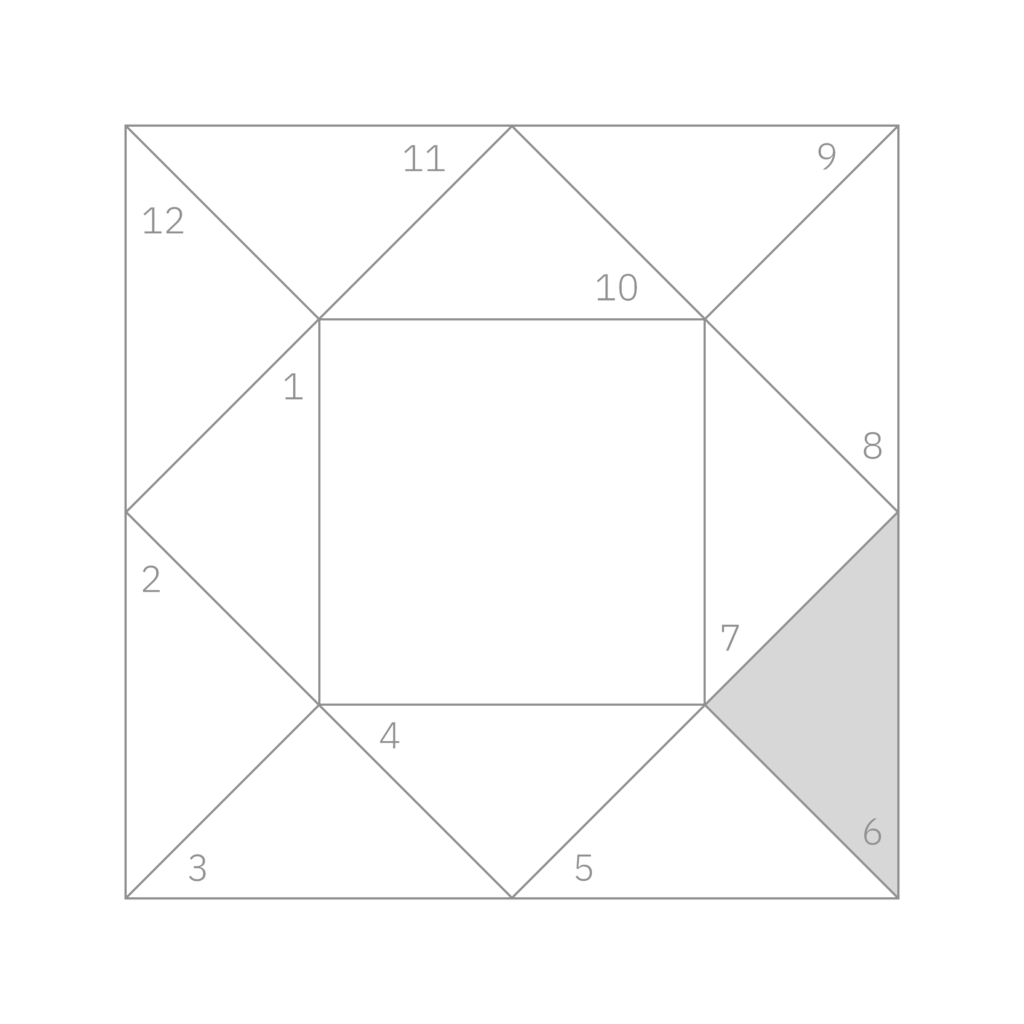
Latin Name: Health (Valetudo).
Greek Name: Bad Fortune (Κακη Τυχη — Kakē Tuchē).
Arabic Names:
- بيت المرض — Bayt al-Marad: the House of Disease;
- بيت السقم — Bayt as-Saqam: the House of Infirmity;
- بيت العبيد — Bayt al-Abid: the House of Slaves.
House Type: cadent (decline).
House of ‘Joy’: for the figures of F Mars ( Puer, Rubeus).
House of ‘Sorrow’: for the figures of L Saturn ( Carcer, Tristitia).
Mundane Planetary Ruler: B Mercury.
Direction: north-west.
Anatomy: digestive tract, intestines, abdomen.
If the twelfth house signifies "demons“—that is, in modern terms, negative psychological patterns (hidden influence, loss of freedom, and a tendency toward unhealthy attachments)—then the opposite sixth house shows the consequences of their operation. These manifest as difficult circumstances, adverse events, misfortune, sorrow, and deprivation. In this sense, the sixth house is associated with blows of fate, periods of hardship, and what may be called adversity—what William Shakespeare described as “the slings and arrows of outrageous fortune.” It is no accident that the ancients referred to this house as “Bad Fortune.”
Illness and Places of Treatment
There is also another channel through which the twelfth house manifests—namely, on the bodily or symptomatic level. Here, negative psychic influence expresses itself as illness. Accordingly, the sixth house signifies disease as a class (while specific illnesses pertain to the first house), and as the result of self-destructive tendencies indicated by the twelfth house. It is likewise associated with places where illness is treated and managed: hospitals, clinics, infirmaries, medical stations, lazarettos, and similar institutions of care.
Servants, Service, and Small Animals
If the twelfth house denotes those who rule over us in secret, then the sixth house, by contrast, shows those over whom we exercise open authority. This is the sphere of service in the practical sense—those who perform tasks or render services for us. Within this same archetype fall small animals kept for use or utility: goats, poultry, dogs, and other domestic animals too small to be ridden.
In this respect, the sixth house includes:
- subordinates and employees;
- those who work for us or provide services by hire: cleaners, housemaids, plumbers, mechanics, builders, repairmen, nannies, caretakers, drivers, couriers, cooks, waiters, hairdressers, tutors, and similar workers engaged on a service basis;
- in earlier times, slaves.
Key Note on the Sixth House
Tenants and the Master—Servant Model
When William Lilly assigns tenants to the sixth house, he is reasoning from the model of “master and servant.” In the modern world, however, such a relationship no longer applies in this form: if one lets property, the tenant is more properly signified by the seventh house, not the sixth house.
Common Error
The Sixth House as the “House of Work”
A widespread modern notion claims that the sixth house signifies one’s work or life service. This is incorrect. Social role, profession, and public standing belong properly to the tenth house. The expression “The House of Service” is often mistranslated: it should be understood as the house of services rendered, not as a calling or higher vocation. Therefore, the sixth house does not describe one’s career, employment, or occupation, regardless of how humble or demanding it may be.
Examples of Sixth House Questions
- Is my cleaner honest?
- Will the builder I intend to hire complete the work properly?
- Will my lost cat return home safely?
- Why have my chickens stopped laying eggs?
- Is this hospital suitable for childbirth?
Quotes on the Sixth House
In the sixth house, we ask about servants and about slaves, about assistance and about small beasts that are pigs, sheep, goats, foods and the rest of things in this manner, and about illness and about incarceration and about sickbeds of rest.
Lectura Geomantiæ
Because it (the sixth house) lies beneath the Earth, it signifies “hidden wars”, that is, illnesses and deformities.
Abraham Ibn Ezra, The Beginning of Wisdom, Chapter III
A planet in the sixth house is like a weak man who runs away.
Abraham Ibn Ezra, The Beginning of Wisdom, Chapter VIII, § 114
The sixth house does signify infirmities and sickness, chiefly afflicting these: servants and maids. By the same house we may also judge all that shall happen before old age or the end of life; also changings and removings from place to place. And all small beasts and cattle are signified. And it rules the inferior part of the belly. The joy of F Mars.
Claude Dariot, A Brief and Most Easy Introduction to the Astrological Judgment of the Stars, Chapter XII
The sixth house has signification of servants, day-labourers, and of the lesser sort of cattle, such as sheep, hogs, goats, hares, coneys, etc. It signifies the nature and qualities of sicknesses, shepherds, warreners, and such as look after small cattle. It signifies uncles, or the brothers and sisters of the querent’s father. It rules the belly and the inferior parts, etc.
John Middleton, Practical Astrology, Chapter XI
It concerns men and maid-servants, galley-slaves, hogs, sheep, goats, hares, coneys, all manner of lesser cattle, and thereby sickness: its quality and cause, the principal humor offending, whether curable or not curable, whether the disease be short or long; day-labourers, tenants, farmers, shepherds, hogherds, neatherds, warreners; and it signifies uncles, or the father’s brothers and sisters. It rules the inferior part of the belly and the intestines even to the arse: this house is a feminine and cadent house, unfortunate, as having no aspect to the ascendant… F Mars rejoices in this house… We usually find that F Mars and C Venus in conjunction in this house are arguments of a good physician.
William Lilly, Christian Astrology, Chapter VII