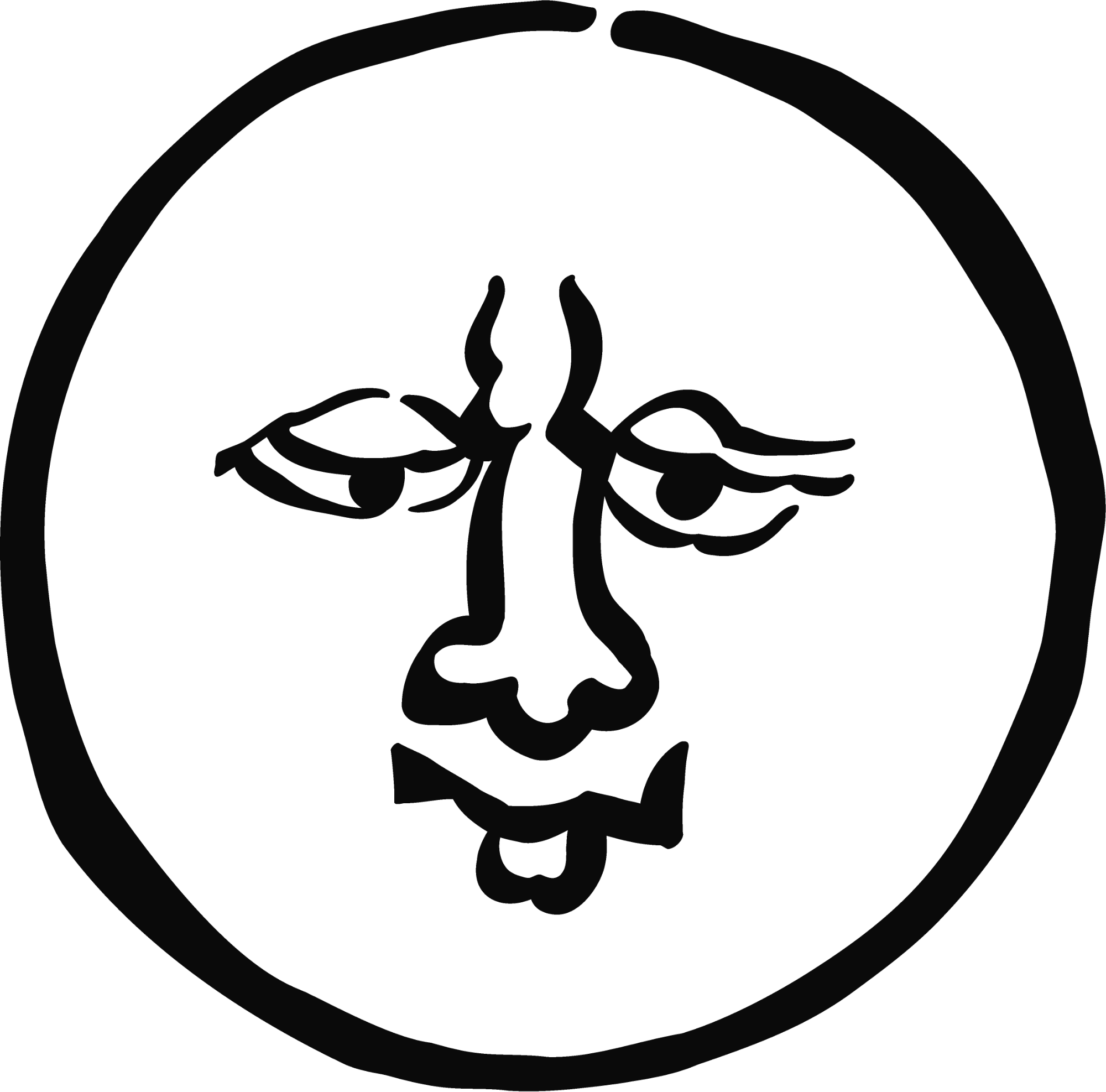

Latin Names:
- Tristitia: Sorrow · Sadness · Mournfulness · Grief · Melancholy · Gloominess · Dejection · Moroseness · Sourness · Harshness · Sternness · Severity;
- Damnatus: Condemned · Convicted · Found Guilty · Sentenced · Doomed · Damned · Criminal · Reprobate · Wretched;
- Transversus: Turned Across · Lying Across · Crosswise · Athwart · Transverse · Traversing · Oblique · Flanking · Sideways · Turned Aside · Averted · Diverted · Converted;
- Diminutum: Shattered · Broken · Dashed to Pieces · Diminished · Lessened · Reduced · Violated · Outraged.
Greek Name: Descending · Downward-Bearing · Downward-Carrying · Downward-Tending · Sinking Downward · Declining (κατωφερες — Katopheres).
Arabic Names:
- الإنكيس — al-Inkis: Inversion · Reversal · Turning Upside Down · Reversal of Order · Turning Back · Reversion;
- المنكوس — al-Mankus: Inverted One · Reversed One · One Turned Upside Down · One Turned Backward · One Set in Reverse Order · Downcast One;
- الركيزة — ar-Rakizah: Pillar · Fixed Support · Upright Post · Planted Stake · Weight-Bearing Prop · Stanchion · Pier.
Hebrew Name: Low Head · Lowered Head · Head Brought Low · Bowed Head · Downcast Head · Humbled Head (שפל ראש — Shefel Rosh).
Alternative Names: Crosswise · Diminished · Accursed · Head Down · Fallen Tower · Cross.
Image: a pillar falling downward.
Element: 🜁 air.
Planet: L Saturn, especially in its diurnal expression.
Zodiac Sign: k Aquarius.
Natural Property: firm, stable, and strong.
Inversion: Lætitia.
Complement: Cauda Draconis.
Body System: skeletal system (sometimes Carcer).
Anatomy: calves, shins, ankles, ankle joints; more generally, bones, teeth, the spleen, and the right ear.
Human Signification: grandmother.
The Master Signification of Tristitia
Sorrow, Descent, and Pressure from Above
Tristitia is the figure of sorrow, heaviness, suffering, disappointment, and descent. Its principal motion is downward: from hope into dejection, from lightness into burden, from open expectation into compression, from inner height into the bowed head. It forms the inverted pair of Lætitia. Lætitia lifts the soul and opens it toward joy; Tristitia bends the soul beneath weight, lowers the head, and brings the person into a state of inward diminishment.
This meaning is confirmed by the figure’s own names. Tristitia points to sorrow, grief, gloom, harshness, severity, and moroseness. Damnatus adds the image of condemnation, sentence, guilt, doom, and being judged against. Transversus shows what lies across the path, what has become crooked, oblique, sideways, contrary to the natural course of the matter, or turned away from the right direction. Diminutum shows reduction, breakage, shattering, violation, and loss of fullness. The Greek Katopheres speaks of descent and downward motion. The Hebrew Shefel Rosh gives the clearest image of all: low head, lowered head, humbled and downcast head.
On the mental and emotional level, Tristitia signifies the soul burdened by Saturn. It shows sorrow, loneliness, melancholy, depression, severe anxiety, fearful expectation, alienation, inward withdrawal, and the sensation that something is pressing down upon the person from above. It must not be reduced to simple “sadness.” Tristitia is not a passing bad mood, but a state of compression: the mind grows heavy, the gaze darkens, hope diminishes, and the future appears closed, poor, or dangerous.
Pressure from Above, Not a Prison
Tristitia must be distinguished from Carcer. Both figures belong to Saturn, but they show different modes of Saturnian limitation. Carcer is Saturn as horizontal binding: enclosure, prison, knot, confinement, being shut in, held on all sides, unable to leave or cross a boundary. Carcer surrounds, closes, binds across space, and prevents action.
Tristitia works differently. It does not so much lock a person in as press down upon them. Its action is vertical: heaviness, lowering, the bowed head, the bending of the spirit, inward compression, falling downward, and the loss of height. If Carcer is walls around the person, Tristitia is the weight above them. If Carcer confines the body within a closed place, Tristitia presses the soul toward the earth.
Tristitia can also be connected with limitation, but its limitation has another image. It does not chiefly surround a person with walls; it weighs them down from above. It does not so much lock them in a place as lower their strength, hope, voice, dignity, and ability to stand upright. Its boundary is felt as heaviness, burden, pressure, humiliation, weariness, and the inability to rise. Thus Tristitia shows Saturn not as the closed prison, but as the descending rule of weight.
Even the astronomical image of Saturn helps to clarify the difference between these two figures. Saturn’s rings give a vivid image of Carcer: matter encircled, ringed, held within limits, separated, and kept upon its appointed orbit. This is Saturn as horizontal limitation, enclosure, and boundary. But Saturn’s inner energy gives another image: not radiance and expansion, but pressure, compression, weight, inward descent of matter, and hidden force born from constriction. This belongs more closely to Tristitia: Saturn as vertical pressure, gravity, inward compression, and lowering.
For this reason, the figure’s image is a pillar falling downward. A pillar should stand upright, bear weight, preserve height, and support form. When it falls, the vertical order is broken. What was raised no longer preserves its dignity. Thus Tristitia shows not merely grief, but the collapse of inward support: the person no longer stands upright in the soul; the head lowers, the gaze falls, and the power to resist heaviness is diminished.
Tristitia and Carcer: Weight and Confinement
If the strength of the Saturnian figures is compared, Tristitia should be considered stronger than Carcer. The reason is not that Carcer is less Saturnian in essence, but that the signs through which Saturn is expressed are different.
Tristitia corresponds to L Saturn in k Aquarius—a masculine and diurnal sign. Carcer corresponds to L Saturn in j Capricorn—a feminine and nocturnal sign. Since Saturn itself is a diurnal and masculine planet, in Tristitia it acts through a sign more consonant with its diurnal and masculine nature.
For this reason, Tristitia shows a stronger, more explicit, and more commanding manifestation of Saturn than Carcer. Carcer binds, shuts, and holds firmly; but Tristitia presses down from a greater height and with greater planetary force. Carcer is Saturn as the closed place, prison, and restraint; Tristitia is Saturn as the descending authority of weight, time, judgment, humiliation, and inward lowering.
The Earth Line and the Lens of Perception
In the linear structure of Tristitia itself, only the Earth line is active. In its pure form, this gives a cold, dry, heavy, dense, and downward nature. There is no free fire of Lætitia, no soft union of water, and no light mobility of air in its happier expression. What remains is earth as weight, resistance, immobility, the lowest point, mass, and limit.
For this reason, Tristitia shows not only an event, but also a way of perceiving. It may signify not an objective catastrophe, but the fact that the person experiences the circumstances as weight, pressure, humiliation, loss, or hopelessness. Yet this perception is not an empty illusion. When the soul sees the world through Saturnian heaviness, it really does begin to act more narrowly, more slowly, more cautiously, and more poorly. Possibilities cease to feel alive; movement gives way to stagnation; trust gives way to suspicion; hope gives way to the expectation of harm.
In this, Tristitia is the inversion of Lætitia. Lætitia opens perception and gives the soul the power to see light, help, usefulness, flowering, and the possibility of joy. Tristitia thickens perception, makes it heavy, and causes the soul to search the world for refusal, decay, withering, danger, and confirmation of its own sorrow. Lætitia gathers honey; Tristitia seeks rot. Yet the traditional order remains firm: Lætitia belongs to Jupiter, the Greater Benefic, and is benefic by nature; Tristitia belongs to Saturn, the Greater Malefic, and is malefic by nature.
Saturn, Time, and the Loss of the Present
Lætitia can show the joy of the present moment: a person enters a favorable time, stops counting, waiting, fearing, and measuring life. The happy person, even if only for a moment, steps out from under the heaviness of time. They live not in the past and not in the future, but in the present as it is being experienced.
Tristitia shows the reverse. It is sorrow born from immersion in time as such. Saturn is time: memory, age, delay, expectation, decay, loss, duration, the past that can no longer be changed, and the future that has not yet arrived but already frightens the soul. When a person falls under Tristitia, they often fall out of the living present and begin to live in heavy time: in regret over the past, fear of the future, memory of losses, calculation of damage, and expectation of the end.
This may be called a desynchronization from the present moment. In strict experience, the person is given only present reality: what they see, do, feel, and accept now. The past already exists as memory; the future exists as expectation, fear, or image. But Tristitia causes the soul to treat these shadows of time as more real than the present itself. The person no longer lives where they are; they live among traces, debts, grievances, premonitions, calculations, and dark possibilities.
Thus a particular Saturnian sorrow arises—not merely sorrow from a specific misfortune, but sorrow from life under the dominion of time. The person looks not at what is, but at what has been lost, what may collapse, what will expire, grow old, disappear, or prove vain. In this sense, Saturn does not only limit space; he presses through time. He does not merely set up a wall; he shows the age of the wall, the crack in the stone, the end of the road, and the inevitability of decay.
Aquarius, the Mind, and Quiet Voices
Aquarius is a sign of Saturn: masculine, diurnal, airy, fixed by quadruplicity, humane, and weak-voiced. Therefore Tristitia is not mere earthy dullness or absence of thought. There is air in it—that is, thought, knowledge, observation, reasoning, inner speech, and the ability to hold a subject in the mind. But Saturn acts here according to the model of Aquarius: he preserves form, holds direction, returns to one theme, and does not easily release what has once been taken inward.
For a brief distinction, Tristitia may be compared with the other airy figures. Albus as Mercury in Gemini gives thought that is clearer, more verbal, more rational, and more easily expressed. Puella as Venus in Libra gives speech that is softer, more pleasant, conciliatory, and inclined toward human agreement. Tristitia acts otherwise: its air does not so much explain or reconcile as hold, darken, repeat, and press. It may appear as a quiet, weak, suppressed voice; and in questions of the mind, as a dark inward whisper returning again and again.
From this arises one of the subtler meanings of the figure: Tristitia can show voices in the head—not necessarily in the crude medical sense, but as a stream of quiet, dark, suspicious, exhausting thoughts. This is the voice that trusts no one. The voice that questions everything. The voice that continually searches for error, danger, harm, hidden motive, future loss, or proof that hope is false. It does not simplify life, but complicates it. It does not lead to clarity, but makes consciousness narrow, cold, and overburdened.
In more evident cases, this stream comes outward: the person speaks to themselves, argues with absent people, justifies themselves, accuses, and answers an invisible interlocutor. From the outside, this looks strange, and at times almost mad. But Tristitia shows that the same form may remain soundless: the person says nothing aloud, yet inwardly continues to converse with themselves, as though within the mind there were already a second voice, a second judge, or a hidden accuser. This does not necessarily indicate illness in the medical sense, but it gives the figure a shade of mental splitting, compulsive self-argument, and dark inward doubleness.
In extreme and severely afflicted testimonies, Tristitia may signify not only dark thoughts, but dangerous ones: self-destructive, suicidal, criminal, blasphemous, obsessive, or deeply harmful. This should not be made its ordinary meaning in every chart. But when the question, house, reception, and neighboring figures confirm a severe affliction of the mind, Tristitia may show precisely such a Saturnian voice within the head: quiet, dark, pressing, and alienating the person from life, from others, and from their own sound judgment.
In this, Tristitia differs from the Martial figures such as Puer and Rubeus. There the harm more often acts hotly, sharply, openly—through eruption, rupture, violence, inflammation, or decomposition. Tristitia acts more coldly and slowly: thought does not explode at once, but repeats, grows heavier, compresses hope, and gradually inclines the person toward hopelessness, guilt, doom, or a harmful decision.
Aquarius, the Vessel, and the Stream of Thought
The ancient image of Aquarius is a human figure with a vessel from which water pours downward. But this water must not be understood elementally: Aquarius is not a water sign, but an air sign. The water is an image through which the movement of air, reason, and thought becomes visible. What is invisible in itself—the flow of reasoning, inner speech, knowledge, memory, and mental movement—receives the visible form of water poured from a vessel.
For Tristitia, this image is especially important because the figure itself shows downward motion. Here Saturn acts according to the Aquarian model: through a humane airy sign, through knowledge, reasoning, weak voice, the preservation of form, and a downward-directed stream of thought. Therefore Tristitia can show sorrow born not from feeling alone, but from reason itself: from prolonged reflection, doubt, memory, fear, awareness of limit, and the mind’s return to what has already been lost or will inevitably end.
This is not Lunar moisture, not formless water, and not the fertile overflow of life. It is air given under the image of water: thought becomes a stream, the vessel gives it form, and the downward motion shows how reason may descend toward grief, heaviness, and the Saturnian knowledge of limit.
Here the words of Ecclesiastes are especially fitting:
In much wisdom is much grief; and he that increaseth knowledge increaseth sorrow.
Ecclesiastes 1:18, King James Version
This is one of the most precise formulas of Tristitia as Saturn in Aquarius. Knowledge is not evil in itself, but it does not necessarily bring benefit, relief, or wise application. Sometimes knowledge reveals limit, loss, vanity, aging, error, guilt, decay, and impossibility. A person may know more and not become happier; may understand more deeply and suffer more severely.
Therefore Tristitia can be useful for study, but its usefulness is severe and not always pleasant. It gives not inspiration, but patience; not light curiosity, but the ability to remain with a difficult subject; not the joy of discovery, but the heavy retention of thought until the matter is understood. Aquarius as fixed air can hold the mind upon a theme. But this does not mean that the knowledge gained will necessarily be useful, benefic, or rightly applied. It may bring benefit if joined to sound judgment and measure; but it may also increase anxiety, pride, suspicion, sorrow, or the cold understanding of limit. Tristitia gives knowledge in a Saturnian way—through heaviness, time, solitude, repetition, and the encounter with what the person did not always wish to know.
Illness, Torment, and the Lowering of Vital Force
On the physical plane, Tristitia can indicate illness, weakness, torment, exhaustion of vital force, and a bodily condition in which the joy of movement gives way to heaviness, pain, or restriction. If Lætitia shows health, relief, restoration, and the widening of inner space, Tristitia shows the reverse: pressure, tension, suffering, loss of strength, and a state in which body and soul enter a defensive posture.
Here the opposition to Sanus, one of the names of Lætitia, is especially important. Sanus means wholeness, soundness, health, good condition, the ability to remain unharmed and inwardly gathered. Tristitia gives the opposite pole: ill-being, unsoundness, sickliness, decline, morbidity, lowered vitality, and loss of inward wholeness. Its sorrow is not only emotional; it may become a physical state in which the body no longer sounds whole and healthy.
Tristitia is therefore connected not only with illness as a fact, but with the experience of illness: heaviness, painfulness, long endurance, fear, weakening, and the feeling that life has narrowed. It lowers mood, vital force, and expectation of a favorable outcome. In this sense, its downward movement appears on every level: mood falls, strength falls, hope falls, the body grows heavy, and the future seems poorer than the present.
Tristitia is especially harmful where heavy thinking begins to wear down the body itself. Dark thoughts, constant inner dispute, anxiety, suspicion, self-accusation, and endless return to the same matter can overload the nervous system, disturb the body’s peace, and gradually make the person ill. This is no longer merely a “bad mood,” but Saturnian self-wasting: the soul consumes its own strength, and the body bears the consequence of that inward heaviness.
In the language of traditional medicine, the extreme image of this Saturnian logic may be found in diseases of black bile, including cancerous disease as a symbol of heavy self-destruction from within. This is not a modern medical explanation of the cause of cancer, but a traditional and symbolic analogy: illness as inward self-consuming, when the whole no longer preserves its own wholeness and one part of the body begins to act against it. In this image, Tristitia shows the extreme form of Saturnian morbidity: life compresses, darkens, and wears itself away.
Diminishment, Poverty, and the Loss of Fullness
In material questions, Tristitia most often indicates worsening, reduction, loss, depletion of resources, poverty, lack, privation, or the loss of former fullness. It may show not acquisition, but diminution; not growth, but contraction; not the strengthening of joy, but the disappearance of what had supported the person.
Here it is important to distinguish it from Carcer. In financial questions, Carcer more often shows restriction in means: money exists, but it is bound, locked, inaccessible, held back, rigidly allocated, or unable to move freely. Tristitia may show poverty itself, destitution, sorrowful lack, and such shortage of money as brings grief, humiliation, and a heavy sense of decline. This is not simply “I am not allowed to spend,” but “I have nothing to spend,” or “what I had is diminishing and melting away.”
In questions of investments, portfolios, assets, and price charts, Tristitia very naturally shows downward movement: falling price, loss of value, drawdown, depreciation, capital melting away, and the loss of former worth. This is not merely restricted access to money, but the descending motion of value itself. The asset was higher—now it is lower; the capital was fuller—now it is poorer; the chart is not held in the cage of Carcer, but falls along the line of Tristitia.
Diminutum expresses this layer of the figure well: the thing becomes smaller, poorer, weaker, less whole, more broken. Damnatus adds the feeling of judgment: the situation seems already condemned, doomed, or deprived of mercy. Transversus shows that the matter does not proceed straight ahead, but lies across the path, deviates, turns sideways, meets crookedness or inward obstruction. Thus Tristitia often signifies not only loss, but loss of direction, diminution of force, and destruction of former confidence.
If the question concerns something built, formed, or raised upward, Tristitia may signify its fall, destruction, demolition, collapse, dismantling, or physical ruin. The image of the “falling pillar” is therefore exact: what was meant to stand no longer preserves its height. A house may be demolished, a structure destroyed, a support weakened, a tower overthrown, and the former form brought down into a lower state.
Lower Places and the Neutral Direction Downward
Sometimes Tristitia has an indicative rather than malefic meaning. It may simply show direction downward: a lower place, descent, lowering, a lower floor, basement, pit, well, foundation, immersion, burial, or something beneath the surface. In such a case, the figure does not say “bad,” but “down.”
This dry spatial meaning should not automatically be turned into an unfavorable judgment. In a question about the location of a thing, Tristitia may show that the object is lower, under something, in the basement, at the bottom of a cupboard, at the base, underground, in a pit, or in the lower part of the place. In a question about movement, it may show descent, lowering, falling, movement from an upper level to a lower one, or transition into a lower position.
Yet in most life questions, downward movement easily becomes an image of deterioration. What in space means “lower” often means “worse” in fortune: fall in status, decline of strength, diminution of resources, loss of hope, loss of joy, or movement toward a heavier state. Thus the neutrality of Tristitia always depends upon the context of the question.
Earth, Buildings, and Stability
Tristitia receives a positive or neutral meaning when the question itself requires Saturnian stability, weight, earth, solidity, a lower foundation, or the long-term preservation of form. It may be favorable in questions of real estate, land, buildings, foundations, underground structures, masonry, walls, fences, hedges, boundaries, and everything that must stand firmly, be fixed in place, have weight, and endure through time.
For this reason, in geomantic charts Tristitia can often simply signify a building, structure, house, tower, plot of land, real-estate object, or heavy material construction as such. The meaning here is not necessarily positive and not necessarily negative. The figure may convey the bare fact of a structure: it stands, has mass, form, foundation, height, walls, heaviness, and fixedness in place.
This must be distinguished from Carcer. Tristitia shows a building not because it closes, locks, or holds someone inside, but because it is a heavy, stable, material, standing form. If the chart speaks simply of a house, building, property, structure, or object of land, Tristitia may be a perfectly natural significator. But if the main point of the question is closure, confinement, a monastic enclosure, prison, cell, locked institution, or the impossibility of leaving, then Carcer acts more clearly.
Here the heaviness of Tristitia does not necessarily harm. What is bad for joy and free movement may be good for a wall, foundation, basement, storehouse, boundary, or fortified property. If Lætitia resembles growth upward, Tristitia may be useful where rooting downward is required. It does not give flowering, but it may give strength. It does not give lightness, but it may give stability. It does not bring joy, but it may keep form from falling apart.
Contraction, Relief, and Useful Reduction
In household, business, and economic matters, Tristitia may be useful where expansion is not required, but contraction is. It can be favorable for reducing expenses, stopping losses, recovering investment, getting rid of excess stock, selling dead weight, closing useless directions, and relieving a system by making it smaller.
This is not the joyful acquisition of Acquisitio and not the happy improvement of Lætitia. It is Saturnian reduction: less excess, less heaviness, less leakage, less of what should no longer be preserved. Sometimes a matter improves precisely because it is reduced. The unnecessary weight is dropped, the useless part cut off, dead stock sold, needless expenditure stopped, and the system becomes poorer outwardly but more stable in substance.
In questions of diet, Tristitia may also be useful if the goal is weight loss. Here its reduction becomes desirable. But weight loss may also be shown by Amissio, and the difference between them is important. Amissio, as a figure of Venus, may indicate a softer, more pleasant, or benefic loss of what is excessive. Tristitia remains the figure of Saturn and the Greater Malefic; therefore its weight loss may be accompanied by deprivation, weakness, exhaustion, sickliness, or harm to health if the chart confirms it. In extreme cases it may show not healthy slimming, but wasting, emaciation, dystrophy, or loss of bodily fullness through illness.
Burial, Secrecy, and the Ancestors
In questions of burial, secrecy, and concealment, Tristitia may be favorable. It suits the burial of the dead, the hiding of things, the concealment of treasure, the preservation of secrets, and everything that must be hidden, buried, placed lower, removed from sight, or given over to the earth.
Here again, Tristitia must be distinguished from Carcer. Carcer hides through enclosure, locking, holding inside, and fencing off. Tristitia hides through descent: beneath the earth, beneath the surface, into a lower place, into the past, into the grave, into the layer of memory, into depth. It does not so much close a door as lower the thing beneath the visible level.
From this comes its possible connection with ancestors. Saturn is connected with old age, time, bones, graves, the past, ancestral memory, and what lies beyond the living present. Tristitia may indicate the dead, elders, the grandmother, an ancient line, the heaviness of lineage, blood-memory, or what is handed down from the past as a burden. This is not necessarily luminous ancestral blessing, but rather the weight of inheritance, bone-memory, and the pressure of what came before.
Moral Corruption and Harmful Combinations
Sometimes Tristitia is associated with moral corruption, dissoluteness, perversion, or debauchery. But this should not be made its primary meaning. In itself, Tristitia more properly shows heaviness, depression, lowering, sorrow, harm, and Saturnian gloom.
Meanings of moral instability arise only in the proper context of the chart, and especially when Tristitia is joined with figures that add disorder, passion, wandering, or dissoluteness, such as Rubeus or Via. Then Saturnian lowering may become not only sorrow, but a fall in moral condition, deviation from the straight path, or descent into a harmful way of life. But without such context, Tristitia should not be turned into a general sign of vice. Its own nature is stricter, drier, darker, and heavier.
Spiritual Heaviness and Severe Wisdom
In spiritual questions, Tristitia is unfavorable in most cases, because it shows not the ascent of the soul, but its lowering, compression, heaviness, fear, despondency, and loss of inner height. It may give patience, sobriety, and severe wisdom, but usually through pain, delay, deprivation, and the experience of being stuck.
Sometimes suffering itself forces a person to see more widely, more deeply, and more seriously. When a person is trapped in a painful situation and does not know how to escape it, they are compelled to stop, look more deeply, learn endurance, and see those sides of the world that joy usually does not notice. But this does not make Tristitia benefic by nature. Its wisdom is Saturnian: it comes through heaviness, time, limitation, and necessity.
In this sense, Tristitia does not so much teach as force one to learn. It does not console, as Lætitia does; does not clarify thought, as Albus does; does not join parts of the matter, as Conjunctio does; does not soften or bring pleasant balance, as Puella does. It makes the head bow, brings the person face to face with limit, and forces them to know what they did not wish to know. Its knowledge is often sorrowful, and precisely there lies its Saturnian force.
General Judgment
In most questions, Tristitia is a malefic figure. It indicates falling, reduction, worsening, sorrow, illness, deprivation, destruction, pressure, alienation, anxiety, poverty, lowering of condition, and loss of inward height. It does not open or rejoice, as Lætitia does. It compresses, lowers, and makes the head bow.
But when the question itself requires stability, endurance, contraction, earth, building, foundation, a lower place, burial, concealment, secrecy, reduction of expenses, removal of excess, or downward motion, its nature may become useful. Tristitia does not thereby become a benefic. It remains Saturn and the Greater Malefic. But a malefic can be useful where one must not grow, but reduce; not reveal, but conceal; not rise, but lower; not rejoice, but endure; not expand, but bear weight.
Thus Tristitia is not merely sadness. It is sorrow as descent, time, pressure, mental heaviness, the knowledge of grief, the lowering of vital force, and the bowed head. It shows the person upon whom Saturn presses: above—the weight; within—the dark voice; ahead—the fear of time; below—the earth to which all things gradually return.