
Latin Names:
- Via: Way · Road · Path · Street · Route · Track · Passage · Passageway · Channel · Duct · Pipe · Windpipe · Cleft · Opening · Slit · Gap · Seam · Stripe · Journey · March · Travel · Going · Movement · Direction · Progress · Course · Method · Means · Mode · Manner · Way of Life · Right Way · Proper Method;
- Iter: Journey · March · Route · Road · Passage · Way Through · Right of Way · Free Passage · Course · Progress · Travel · Direction · Channel · Branch.
Greek Names:
- οδος — Hodos: Way · Road · Path · Track · Route · Course · Journey · Travel · Passage · Direction · Way of Life · Method · Means · Manner · Proper Way · Right Way · The Way;
- πορος — Poros: Passage · Way Through · Opening · Channel · Means of Passage · Ford · Strait · Bridge · Means to an End · Resource · Journey;
- τριβος — Tribos: Beaten Path · Worn Track · Road · Highway · Path Made by Repeated Passage.
Arabic Name: Way · Road · Path · Route · Highway · Trail · Track · Street · Passage · Direction · Course · Way Through · Means · Method · Manner · Approach · Proper Way · Right Road · Sound Way · Religious Path · Spiritual Method · Sufi Path or Order (الطريق — at-Tariq).
Hebrew Name: Way · Road · Path · Trodden Road · Journey · Distance · Direction · Course · Manner · Habit · Custom · Way of Acting · Way of Life · Course of Life · Conduct · Moral Character · Proper Way · Right Way (דרך — Derekh).
Alternative Names: Wayfarer · Candle · Journey.
Image: a road.
Element: 🜄 water.
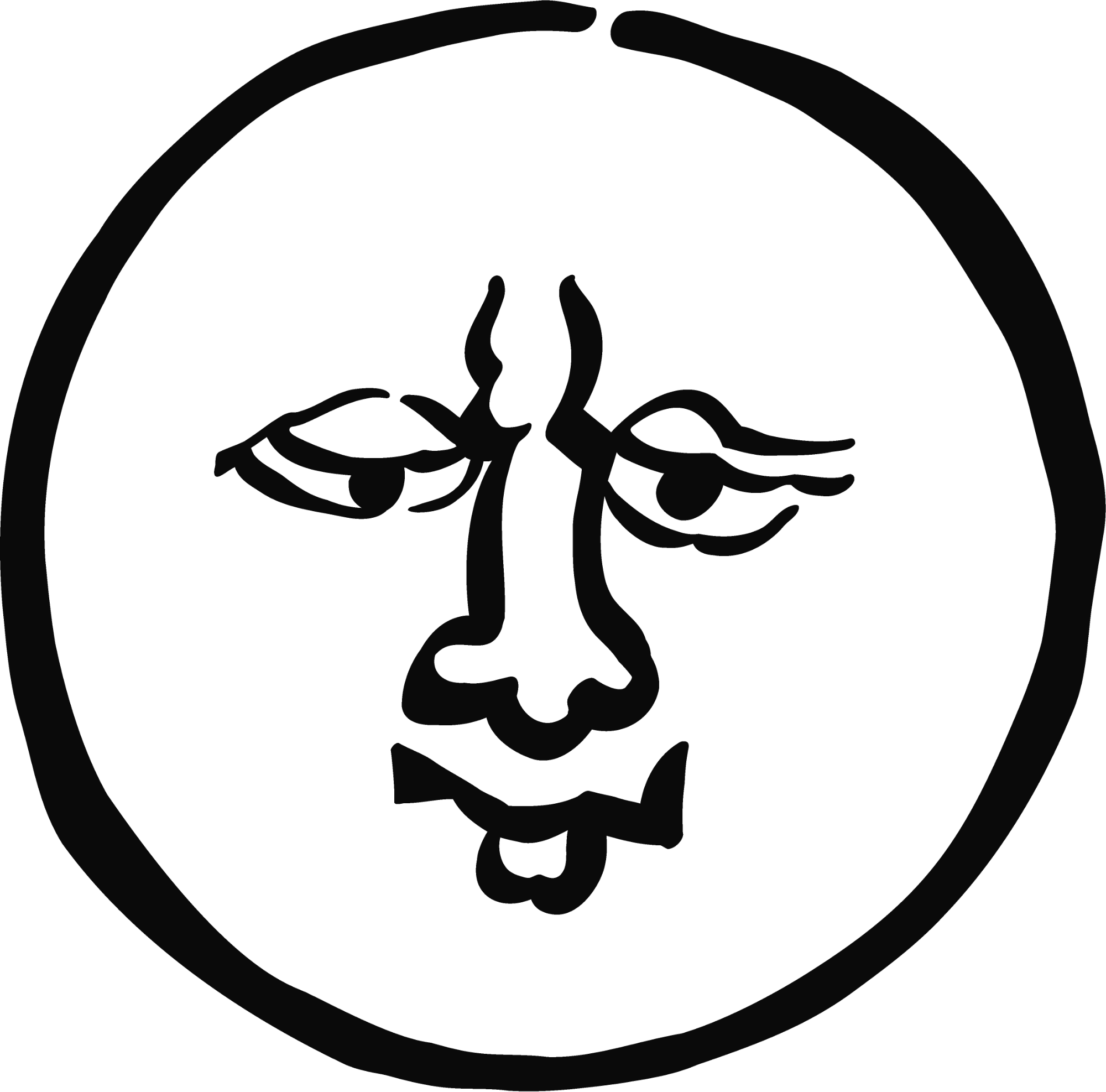
Planet: Waning E Moon.
Zodiac Sign: d Cancer.
Natural Property: moderate or middling; traditionally counted among the mobile, unstable, and weak figures.
Inversion: Via.
Complement: Populus.
Body Systems: digestive system (sometimes Fortuna Minor); urinary system (sometimes Amissio).
Anatomy: trachea, esophagus, stomach; sometimes the birth canal in questions of pregnancy.
The Master Signification of Via
The Road, the Method, and the Passage
Via is the figure of the road, the path, the route, the passage, and movement from one condition into another. It can signify a way, a street, a track, a highway, a journey, a departure, a method, a means, or the manner by which something is done.
This is already contained in the name itself. The Latin Via and Iter do not mean only a road beneath the feet, but also a way through, a course, a method, a right of passage, and a proper way of proceeding. The Greek Hodos and the Hebrew Derekh carry the same double sense: a road one travels and a way one lives or acts. Poros adds the idea of a passage, channel, or means of getting through. The Arabic at-Tariq likewise joins road, path, direction, and method. All of these names point to the same center: Via is the way by which something passes, proceeds, or changes state.
If Populus tends toward home, the inhabited place, the familiar environment, and the many gathered together, Via shows movement out of that condition. It is the road from home, the journey outward, the act of leaving, the distance between one place and another, and the direction in which the matter goes. Populus gathers; Via departs. Populus shows many presences in one place; Via shows the line of movement away from a settled condition.
The figure’s form confirms this. Via contains only four points, the smallest number any geomantic figure can have. All four lines are single: head, neck, body, and feet. No part of the figure stands beside another point. In this it is the direct opposite of Populus, whose eight points show fullness, multitude, repetition, and collective presence.
The journey of Via may be physical, emotional, mental, spiritual, or circumstantial. In every case it implies distance, direction, and passage. It asks not only what is happening, but where the matter is going.
Via and Populus
Via and Populus are both lunar figures and both belong to Cancer, but they express opposite states of the lunar nature.
Populus shows the Moon as fullness, reflection, multitude, common life, and the condition in which many things are gathered together. It belongs to crowds, public places, households, communities, familiar surroundings, and matters that depend on many participants rather than one person alone.
Via shows the Moon in another condition: decreasing, departing, loosening, moving away from what has been gathered. It does not describe fullness held in place. It describes the moment when the old condition no longer remains still and the matter begins to move elsewhere.
For this reason Via should not be read simply as “the Moon” in a general sense. It is not the full Moon of Populus. It is the waning Moon: light decreasing, former fullness weakening, the settled form losing its hold, and the matter passing into another state.
The Waning Moon
The waxing Moon tends toward increase, growth, filling, and future fullness. The full Moon shows completion, visible form, and the light received at its greatest. The waning Moon moves away from that fullness. It signifies decrease, release, expenditure, withdrawal, and the gradual loosening of what had been complete.
This does not make Via automatically unfortunate. Sometimes decrease is exactly what is needed. A harmful place must be left. A stagnant condition must be broken. An old habit must be abandoned. A burden must be reduced. A person must pass out of one state before another can begin.
But Via rarely preserves things exactly as they are. It moves, alters, removes, redirects, and carries the matter onward. It often shows that the former condition can no longer be maintained.
This change is not Mercurial. Mercury changes through words, messages, documents, calculations, signs, agreements, and intellectual methods. Via changes in a lunar way: through circumstance, body, mood, distance, travel, habit, household conditions, fluids, timing, and the ordinary flow of events.
Movement and Alteration
Via always brings movement, change, or alteration. This is not merely symbolic. In geomantic addition, when Via is added to another figure, it changes every line of that figure. A single line becomes double; a double line becomes single.
So Via does not merely move alongside another figure. It alters the figure itself.
A bad figure may become good: Rubeus + Via = Puella.
A good figure may become bad: Acquisitio + Via = Amissio.
A stable figure may become mobile, and a mobile figure may become stable.
This is the peculiar strength of Via. By natural property it is mobile, unstable, and weak. Yet this weakness belongs to permanence, not to effect. Via is weak as a fixed condition, but powerful as a principle of transition. It does not hold things in place; it carries them into another state.
The exceptions are Caput Draconis and Cauda Draconis. These figures are Lunar Nodes, and they do not submit to the ordinary lunar alteration of Via in the same way as the other figures. Cauda Draconis + Via = Tristitia: a harmful figure becomes another harmful figure. Caput Draconis + Via = Lætitia: a benefic figure becomes another benefic figure. The form changes, but the basic benefic or malefic direction remains.
The changes shown by Via are often quick. This agrees with Cancer as a movable sign and with the Moon as the swiftest of the planets. Via rarely promises rest. It shows motion, departure, redirection, and the need to continue.
Method and the Right Way
A way is not only a road in space. It is also a method.
A person who wants to reach a goal must choose an approach, a means, a route, and an order of action. For this reason Via can show the method by which a person is trying to solve a problem. It may show whether the chosen path leads toward the desired end or away from it.
When well placed and not harmed by contrary testimony, Via may show the right road, the straight path, the proper method, and movement in the correct direction. The person is not merely moving; he is moving in a way that can lead somewhere.
When damaged, Via may show wandering, the wrong road, a poor method, avoidance, flight, restlessness, or motion without arrival.
Movement is not good or bad by itself. It is good when change is needed and the road leads to the goal. It is bad when stability is required, or when the person escapes the matter instead of facing it.
The Power of Via
Some Arabic geomancers regarded Via as the most ancient and powerful of the figures because all its internal elements are active. Its vertical form also resembles the letter alif, giving it the image of a first line, a beginning, and a direct principle of motion.
In the same scheme, Populus may be considered the weakest figure because all its internal elements are passive. Via is all activity; Populus is all passivity.
This should not be confused with the figure’s practical elemental nature. The doctrine of active and passive internal elements is one level of interpretation. Zodiacal correspondence is another, and for judgment it is often more useful. Since Via corresponds to Cancer, its element is Water. It does not become Fire, Air, or Earth simply because its internal lines are active.
The power of Via is not the power of a fortress, a possession, or a permanent condition. It is the power of the road, the channel, the method, and the passage. Via is powerful because it makes transition possible.
When Via Helps
Via is favorable when change is desired. It is good for travel, relocation, departure, leaving an unsuitable place, breaking stagnation, changing condition, finding a new method, releasing what is no longer useful, and moving forward.
It is also helpful when the matter requires a way through an obstacle. Via does not always remove the obstacle, but it may show the passage through it.
In questions of roads, journeys, movement, travel, relocation, spiritual discipline, method, and way of life, Via is naturally strong. It favors situations in which progress depends on motion rather than stillness.
When Via Harms
Via is unfavorable when the desired result is preservation, stability, possession, permanence, or keeping things as they are. It does not naturally secure, bind, retain, or hold.
In questions of relationships, property, office, money, rank, or long-term stability, Via may show change, departure, separation, instability, movement away, or inability to remain in the same condition.
Because Via belongs to the waning Moon, it may also show decrease, weakening, exhaustion, loss of former fullness, or gradual disappearance. This is good if the question concerns removing something harmful. It is bad if the querent wants to keep what has already been gained.
Lost and Missing Persons
Via is a natural significator of a lost, missing, absent, departed, or traveling person. If it appears in a chart concerning disappearance, escape, absence, searching, or someone who has gone away, it may be used as a co-significator to draw out more information.
It may show that the person has left the former place, is on the road, is moving, is away from home, or is separated from familiar surroundings. It may also help describe direction, distance, route, method of departure, or the fact of movement itself.
Via does not by itself mean danger. First of all, it means absence through motion.
Person of Via
The traditional person of Via is the wayfarer or traveler: tall, thin, fair or blond, sometimes with a decorative or noticeable beard.
The thinness agrees with the figure itself. Via has only four single points and lacks the fullness of Populus. It does not suggest a heavy, rounded, or abundant body. Its image is narrow, light, linear, and mobile.
A person signified by Via may look as though he does not fully belong to the place where he stands. Even at rest, he may seem ready to leave, continue, withdraw, or move onward.
In character, Via often describes someone solitary, quiet, patient, inward, and self-contained. This does not mean hatred of people. It means that the person is not naturally absorbed into the crowd. He experiences life as a road that must be walked personally.
Such a person may be observant, emotionally reserved, and difficult to read. The watery nature of Cancer and the waning Moon can give a strong inner life that does not easily show itself. Feelings are present, but withdrawn. The person may suffer privately, keep distance, or feel alienated from the surrounding world.
Via can be patient when a goal requires time. This is not the fixed endurance of Saturn, but the patience of a traveler: one step follows another, and the road is crossed by continuing.
In good condition, Via gives independence, self-sacrifice, a personal method, the ability to see differently from the majority, and the courage to leave what is familiar when the path requires it. It can describe someone who does not wait for the crowd to approve his road.
In poor condition, Via gives restlessness, estrangement, emotional absence, inability to settle, avoidance, and the habit of solving problems by leaving rather than confronting them. The person may always be moving, but not truly approaching anything.
The essential question of Via is direction. If the direction is right, solitude becomes strength. If the direction is lost, movement becomes wandering.
Medical Significations
In medical questions, Via often signifies the passages and channels of the body. It may show the trachea, esophagus, stomach, digestive system, urinary system, and, in pregnancy questions, the birth canal.
The logic is simple: Via is that through which something passes. Air passes through the trachea. Food passes through the esophagus and stomach. Fluids pass through the urinary system. A child passes through the birth canal.
On the bodily level, Via remains what it is everywhere else: road, passage, channel, route, and movement through a defined path.
General Judgment
Via is the figure of the road, the passage, the method, and the change of condition. It shows movement away from what has been gathered, especially in contrast with Populus.
Populus shows fullness, multitude, reflection, and the gathered lunar state. Via shows the waning Moon as departure, release, road, movement, and alteration.
It weakens permanence, but strengthens transition. It is unstable as a fixed condition, but powerful as the means by which one state becomes another. It is favorable for travel, change, release, and passage through difficulty; unfavorable for matters that require rest, preservation, possession, and stability.
Above all, Via asks whether there is a road, whether the road is right, and whether it truly leads to the desired end.