

Latin Name: Luna.
Greek Name: Selene (Σεληνη — Selēnē).
Arabic Name: al-Qamar (القمر).
Hebrew Name: Levanah (לבנה).
Alternative Name: the Lesser Luminary.
Mundane House Ruled: Uxor.
Domicile: d Cancer.
Gender: feminine.
Sect: nocturnal.
Qualities: moderately cold and moist.
Element: 🜄 water.
Powers: receptive, reflective, humidifying, assimilative, bodily-formative, multiplying, gathering, moving, and alterative.
Colors: pale, cold, moist, reflective, milk-white, pearly, silvery, watery, and moonlit colors; white, silver-white, pearl-white, milk-white, pearl-gray, soft silver-gray, blue-white, blue-gray, pale sea-green, and greenish-white.
Smells: cool, moist, fresh, faint, watery, milk-like, marine, briny, unripe, lightly vegetal, nocturnal, and sometimes nearly scentless odors; the scents of rainwater, dew, sea air, brine, fresh milk, wet leaves, water plants, and cool night air.
Tastes: salty, insipid, bland, watery, mild, fresh, cooling, milk-like, unripe, and herb-like tastes.
Things: liquid, moist, soft, loose, porous, formless, white, pale, reflective, nocturnal, new, immature, infant-like, bodily, domestic, common, wandering, lost, intoxicating, maritime, unstable, and easily altered things; water, milk, bodily fluids, phlegm, sweat, egg whites, mirrors, bedding, cradles, candles, lost objects, lost or wandering animals, fish, marine things, water creatures, nocturnal creatures, mushrooms, cabbage, intoxicating drinks, and all things connected with moisture, reflection, night, infancy, birth, nursing, household life, wandering, the sea, fluctuation, and change.
Places: fountains, springs, brooks, rivers, lakes, ponds, standing waters, fish ponds, aquariums, pools, baths, bathhouses, wet fields, marshy and boggy places, shores, sea coasts, harbors, ports, piers, docks, public places, crowded places, common gathering places, roads, highways, lonely roads, deserted places of travel, and all places connected with water, moisture, the sea, bathing, fishing, public life, travel, wandering, fluctuation, and change.
Weather: cool, moist, changeable, cloudy, misty, foggy, dewy, rainy, damp, and unsettled weather; shifting clouds, humid air, rain, showers, sea air, fluctuating atmospheric conditions, and weather that easily receives and manifests the nature of the planet with which the Moon is joined or to which she applies.
Metals and Materials: silver, polished silver, silvered materials, mirror-silvering, clear or pale glass, wax, paraffin, soft white waxes, milk, egg white, watery and mucous substances, and all pale, cool, moist, soft, reflective, fluid, milk-like, wax-like, easily melted, or easily altered materials.
Stones: pearl, moonstone, light labradorite, chalcedony, dolomite, apophyllite, celestine, magnesite, and anhydrite; mixed lunar stones include rock crystal (with the A Sun), selenite/gypsum (with F Mars), hiddenite, prehnite, and morganite (with C Venus), blue quartz (with K Jupiter), aragonite and fluorite (with L Saturn), and kunzite (with K Jupiter and F Mars).
Character: soft, tender, receptive, impressionable, changeable, timid, domestic, maternal, nursing, bodily, common, concerned with the present condition, and inclined toward children, household life, common people, movement, travel, and changing circumstances; seeking safety, bodily support, domestic ease, and familiar surroundings through receptivity, habit, adaptation, and yielding to the current condition; in its harsher expression—fickle, fearful, idle and averse to labor, wandering, forgetful, careless, easily led, unreliable in speech, gluttonous, prone to drink or intoxication, lacking foresight, and ruled by mood, bodily appetite, crowd, or immediate circumstance.
Physical Appearance: a soft, moist, fleshy, rounded, and somewhat plump body; a pale, fair, or whitish complexion; a round, full, or full-cheeked face; abundant, thick, or soft hair; fleshy hands and soft bodily features; and a tender, timid, changeable, or quietly receptive expression.
People and Professions: common people, women, mothers, housewives, midwives, wet nurses, nurses, caretakers, sailors, mariners, fishermen, fishmongers, watermen, water-carriers, travelers, pilgrims, couriers, errand-runners, drivers, taxi drivers, coachmen, brewers, maltsters, tavern-keepers, bartenders, sellers of drinks, drunkards, millers, cleaners, washerwomen, hunters, and all who are connected with water, the sea, fish, travel, transport, drink, childbirth, nursing, domestic care, bodily maintenance, common life, and the ordinary movement of daily affairs.
Anatomy: the right eye in women, the left eye in men, the uterus, the abdomen, the lymphatic system, the mammary glands, and the intestines.
Endocrine Gland: the gonads (sex glands).
Diseases: epilepsy, somnambulism, paralysis, retention or suppression of menstrual and other discharges, dropsy, convulsions, cough with fetid or putrid-tasting sputum, and scrofula.
Planetary Years: 4 (~27.3-day sidereal cycle; ~29.5-day synodic cycle).
Stage of Life: infancy (ages 0–4).
Day of the Week: Monday.
Night of the Week: the night from Thursday to Friday.
Astrological Characteristics of the Moon
The Lesser Luminary and Reflected Light
The Moon is the nocturnal and feminine luminary. By nature she is moderately cold and moist, and therefore belongs to bodily life, moisture, birth, growth, change, and the nearest sphere of the sublunary world.
She is called the Lesser Luminary not because her significance is small, but because her light does not arise from herself. The Sun is the source of light, life, centrality, authority, and visible manifestation. The Moon receives the light of the Sun and reflects it into the night.
For this reason her nature cannot be separated from the Sun, though it acts in an entirely different manner. The Sun gives light as a source. The Moon receives, reflects, moistens, forms, multiplies, carries, and alters.
In this sense, the Moon is the mirror of solar power within the sublunary world. She does not rule by central authority, as the Sun does; she does not establish law and order, as Jupiter does; she does not unite through pleasure, as Venus does; and she does not transmit signs, as Mercury does. She acts through receptivity, moisture, bodily life, habit, change, and the flow of circumstances.
Through the Moon, life enters the body, the home, the womb, milk, infancy, the common people, the road, the sea, and the ordinary movement of events.
Moderate Coldness and Moisture, Body, and Organic Life
The moderately cold and moist nature of the Moon makes her the natural ruler of everything bodily, soft, liquid, nourished, growing, and changeable.
She does not signify life as royal radiance, as the Sun does, nor life as noble abundance and ordered growth, as Jupiter does. The Moon signifies life as body: conceived, carried, born, fed, washed, moved, altered, and dependent upon moisture.
For this reason the Moon is naturally connected with mothers, infants, pregnancy, childbirth, midwives, wet nurses, nurses, the breasts, milk, the womb, nourishment, bodily fluids, and all the first conditions of earthly life.
Her domain is not high, royal, ceremonial, or exceptional. It belongs to what is ordinary and necessary: the body, the home, food, water, sleep, care, common life, the road, the sea, the present condition, and immediate need.
In this sense, the Moon does not show the heroic individual or an exalted order, but the very fabric of daily life. She is closest to what is happening to the body, the household, the family, the people, and circumstances in the present moment.
The Moon as the Receptive Mind
In traditional astrology the Moon is related not only to the body, moisture, and birth, but also to the mind in its receptive and reflective capacity. This is not the mind that argues, calculates, records, proves, and transmits through words. That kind of mind belongs more properly to Mercury. The Moon shows another faculty: the ability to receive an impression, retain an image, recognize a condition, reflect the inner light of knowledge, and bring it into immediate understanding.
For this reason the Moon should not be reduced to “emotions” in the modern sense. Her connection with feeling is real, but secondary. Feelings belong to her because she is connected with the body, impression, memory, habit, mood, and receptivity. But in a stricter sense, the Moon is not a chaotic mass of emotions. She is the mirror in which inner knowledge receives image and becomes available to earthly life.
Here again her relation to the Sun becomes clear. The Sun is light, heart, center, and open knowledge. The Moon does not produce this light from herself; but when she is healthy and well placed, she reflects it into the soul and into the sublunary world. Therefore a well-conditioned Moon gives not only softness and bodily responsiveness, but also the ability to understand through immediate perception, experience, image, memory, and inward recognition.
Mercury occupies a different place. He serves the mind through language, writing, calculation, distinction, communication, technique, and proof. He is useful when something understood must be expressed, tested, measured, explained, or transmitted. But Mercury should not become the master. When the servant imagines himself to be the lord, reason becomes cleverness, argument becomes self-justification, and the art of distinction becomes the ability to prove anything at all.
The traditional model of the mind is therefore not reducible to the modern division between rationality and emotion. The Sun gives the light of knowledge; the Moon reflects this light into the receptive soul; and Mercury serves transmission, calculation, and expression. When this order is broken, a person may have a strong Mercury and yet use it only for cleverness, sophistry, self-excuse, or empty invention. But when the Moon is clear and receives the light well, understanding becomes living, whole, and immediately applicable to life.
The Phases of the Moon and the Cycle of Life
The visible phases of the Moon reveal one of the chief foundations of her nature. The New Moon corresponds to birth, beginning, and the hidden emergence of form. The waxing Moon corresponds to growth, increase, development, and the accumulation of strength. The Full Moon corresponds to fullness, manifestation, and the completion of visible form. The waning Moon corresponds to weakening, decrease, exhaustion, release, and gradual disappearance.
These phases show not only the organic cycle of life, but also the very nature of lunar desire. The Moon always seeks to fill a lack, because her light, strength, and fullness are not self-sufficient. The waxing Moon reaches toward what she has not yet received; she desires increase, filling, and future fullness. The waning Moon, by contrast, turns toward what has already been attained but is now slipping away; she carries the memory of lost fullness and the desire to hold or recover what is disappearing. The Full Moon shows the moment when this need is, for a time, satisfied: the light has been fully received, the form has appeared, desire has reached its limit, and an image of balance, measure, and completion arises.
In this sense, lunar hunger does not always mean crude greed. At its root it belongs to receptive incompleteness. The body wants nourishment, the infant wants milk, the home wants safety, the people want the satisfaction of immediate need, and the soul seeks the light that it does not generate by itself, but longs to receive and reflect. The Moon therefore shows desire as the living creature’s need for filling, protection, food, image, habit, closeness, and the completion of the present condition.
In this rhythm the entire cycle of organic life is visible: emergence, growth, fullness, decline, disappearance, and return. For this reason the Moon signifies change, fluctuation, alteration of condition, and impermanence.
But this changeability is not the same as Mercury’s. Mercury changes through words, signs, calculations, documents, pathways between meanings, and methods of transmission. The Moon changes through phases, body, mood, tides, fluids, circumstances, and the flow of events.
Lunar change is not primarily intellectual, but natural and bodily. It is the change of the child, the growing body, water, weather, the crowd, the road, illness, appetite, sleep, the household, and the course of the matter itself.
Movement, Multitude, and Sublunary Life
The Moon is connected not only with body, moisture, and birth, but also with the movement of ordinary events. She shows the course of a matter, its alteration, its passage from one condition into another, travel, wandering, departure from home, and return to it.
Her movement is not Mercurial transmission of signs or calculation of the road. It is the natural flow of circumstances, like the movement of water, the changing of phases, the growth of the body, and the alteration of weather.
At the same time, the Moon does not signify the outstanding individual, but the common human field: home, family, people, crowd, assembly, public places, and the ordinary life of many persons. She is closer to population, familiar surroundings, and everyday bodily necessity than to the royal authority of the Sun, the law of Jupiter, or the intellectual exchange of Mercury.
Therefore the Moon shows both the flow of the event and the common environment through which it passes. She carries the matter through change, but not abstractly: she does so within the body, the home, the people, the road, water, weather, and the nearest circumstances of the sublunary world.
Selene, Artemis, and Hecate
In Greek mythology the Moon is most directly represented by Selene. She is the living image of the nocturnal luminary moving across the sky. Her light is soft, reflected, changeable, and connected with night, sleep, the body, and the hidden continuity of life.
The myth of Selene and Endymion expresses the lunar nature especially well. Endymion is beautiful, passive, and asleep; Selene returns to him at night again and again. There is no solar action here, no Martial conquest, and no Mercurial exchange. It is an image of nocturnal return to the sleeping body, to desire, repetition, sleep, fertility, and the secret continuity of life.
Artemis also touches the lunar sphere, though she should not be entirely confused with Selene. Artemis reveals the Moon’s connection with women, childbirth, maidenhood, young creatures, wild places, and the protection of life at its early thresholds. Through her we see the lunar power over birth, youth, bodily vulnerability, and the passage into life.
Hecate shows the darker and more liminal side of the Moon: night, crossroads, thresholds, wandering, spirits, waning, and the passage from one state into another. She is not the Moon in her pure and primary form, but an important extreme image of lunar power: where night, road, lostness, fear, and change become a threshold between worlds.
These mythic figures reveal different sides of one lunar principle: Selene as nocturnal reflected light; Artemis as the feminine and birth-protecting power of life; Hecate as threshold, darkness, and transition.
Dignity and Affliction of the Moon
When the Moon has strength and dignity, she gives softness, receptivity, kindness, care for the present condition, love of newness, bodily responsiveness, and the ability to adapt quickly to changing circumstances. She makes a person attentive to the body, the home, children, common people, and the immediate course of events.
This is not Venusian pleasantness, nor Jovian benevolence. Venus makes life beautiful, pleasant, and desirable. Jupiter gives order, nobility, law, and abundance. The Moon supports life in another way: she receives, feeds, shelters, softens, adapts, carries, and helps a thing pass through change.
When the Moon is afflicted, these same qualities lose measure. Receptivity becomes passivity and suggestibility. Changeability becomes inconstancy. Softness becomes timidity. Care for the present condition becomes lack of foresight. Movement becomes wandering. Bodily life may descend into idleness, gluttony, drunkenness, inertia, and dependence upon immediate appetite.
At the level of the mind, an afflicted Moon darkens the reflection. She may give false impressions, troubled images, shifting desires, weakness of memory, dependence upon mood, and an inability to distinguish living inner knowledge from a passing bodily state. Then Mercury easily becomes the servant of these fluctuations: he no longer clarifies, but justifies, explains, decorates, and defends what has arisen from fear, appetite, habit, or suggestion.
In extreme affliction, the Moon signifies people who are unstable, passive, idle, wandering, forgetful, careless, easily led, and ruled by mood, bodily desire, the crowd, or immediate circumstance.
The Special Role of the Moon in Horary Astrology
In horary astrology the Moon has special importance because she is the swiftest of the seven traditional planets and the closest to the Earth. For this reason her role in the formation of ordinary events is especially great. The Moon belongs to the sublunary world: to the flow of earthly matters as they unfold in human life.
Horary astrology judges the development of concrete situations. Therefore the Moon does not influence only one part of the chart, but the course of the entire question. She shows the movement of the matter, its change, its development, and its path toward final form.
This can be seen in several important horary factors. The lunar nodes have a special force in horary judgment: they may affect not only a single significator, but houses, planets, and the general judgment of the chart. This is because they are connected with the Moon, and the Moon in turn is connected with the motion of the whole question.
The same applies to the Moon void of course and to the Moon’s placement in the Via Combusta. These conditions concern the Moon first of all, but their meaning extends to the whole matter, because the Moon shows the flow of the question.
The Part of Fortune also has a special connection with the Moon. Among the many Arabic Parts, the Part of Fortune is traditionally connected with the lunar principle; in a Ptolemaic logic it may be understood as a kind of lunar Ascendant. For this reason this point has special significance in a horary chart: it is connected with the Moon and, through her, may touch the whole judgment.
Unlike most planets, whose universal meanings in horary are usually handled cautiously and are secondary to accidental significations, the Moon is an exception. Her universal nature is to exert a temporary, changeable influence and to carry events toward their final form.
If the Moon is not directly occupied with signifying the subject of the question, she is still not idle. If the querent is involved in the situation, the Moon often shows his emotional reactions, inner motives, and unconscious impulses. If the querent is not the center of the situation, the Moon shows the flow of events themselves.
Therefore the Moon in a horary chart is never completely inactive. She always has an active role: either she shows the movement of the matter, reveals the querent’s reaction, or carries the general stream of circumstances through which the question develops and comes to its result.
Astronomical Characteristics of the Moon
The Nearest Celestial Body and the Sublunary World
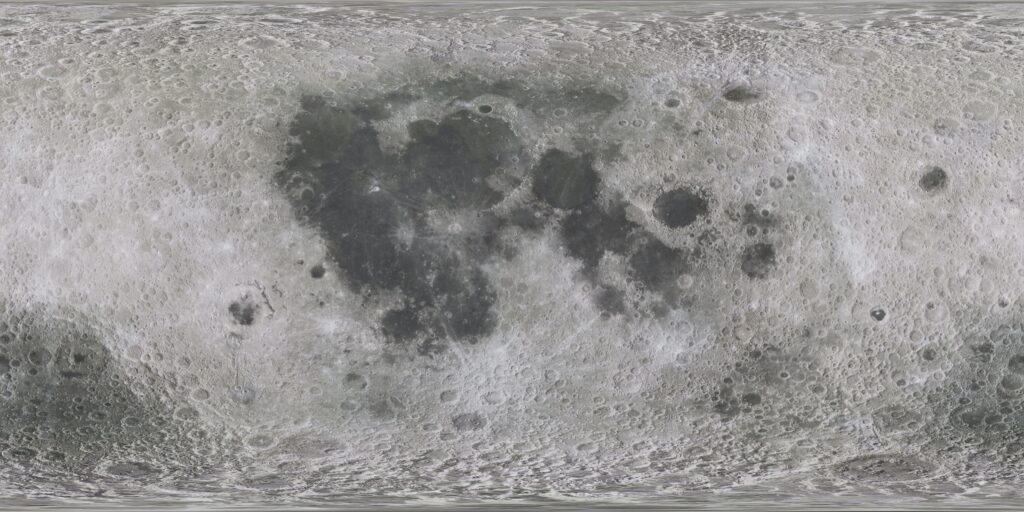
The astronomical symbolism of the Moon begins with nearness. Among the seven traditional planets and luminaries, the Moon alone is physically bound to the Earth as its natural satellite. She does not merely appear closest to earthly life in the visible order of the heavens; in modern astronomy she is literally the companion of the Earth, circling it, affecting its waters, its rotation, and the rhythm of its nights.
For traditional astrology this is of the greatest importance. The Moon belongs to the sublunary world not only because ancient cosmology placed her in the lowest of the celestial spheres, but because her astronomical relation to the Earth is intimate, bodily, and immediate. Saturn is distant; Jupiter gathers a vast system around himself; Mars confronts and strikes; Venus and Mercury remain near the Sun; the Sun stands as the source of light. The Moon is different. She belongs to Earth’s own neighborhood. She is the heavenly body nearest to ordinary embodied life.
This nearness must be understood precisely. The Moon is not a part of the Earth in any simple sense: she is a separate body, lifeless, almost airless, and exposed to space. Yet she is bound to the Earth more closely than any other visible celestial body. She is near enough to move the tides, near enough to measure months, near enough for her phases to be seen by every human eye, and near enough to become the natural image of earthly change itself.
In a very subtle physical sense, the Moon also moves within the farthest reach of Earth’s gaseous envelope. The geocorona—the outermost and most tenuous extension of Earth’s atmosphere—stretches beyond the lunar orbit. This does not mean that the Moon is surrounded by air in the ordinary sense: there is no breathable atmosphere there, no clouded earthly weather, no living moisture spread around her surface. Yet the fact is symbolically striking. The Moon is not only close to the Earth as a satellite; she moves within the faint outer boundary of Earth’s own presence.
Here the traditional idea of the sublunary sphere receives a delicate astronomical echo. The Moon is not a remote sovereign world. She is the nearest celestial boundary of earthly life—close, dependent, responsive, and tied to the changing conditions of the world below.
The Lunar Month, the Number Twenty-Eight, and Imperfect Measure
The motion of the Moon has always been a natural measure of time. Her sidereal orbit around the Earth takes about 27.3 days, while the visible cycle from one New Moon to the next—the synodic month—lasts about 29.5 days. Already, between these two measures, we see one of the essential features of the lunar principle: the Moon is never something perfectly simple or unambiguous. She is astronomical motion and visible appearance, sidereal return and solar relation, body in orbit and light as perceived from Earth.
Traditional symbolism often rounds the lunar cycle to twenty-eight days. This number is not accidental. Twenty-eight is seven multiplied by four: the seven planetary principles unfolded in the fourfold material world—that is, in the world of the four elements. In this sense, the Moon may be understood as the planet through which the whole order of the celestial powers is continually brought down into matter, body, time, and circumstance. This is why lunar mansions, menstrual rhythms, weather lore, agricultural timing, secondary progressions, and many other forms of embodied time naturally gather around the Moon.
Yet the actual sidereal period of the Moon is not exactly twenty-eight days, but about 27.3. This small discrepancy is symbolically meaningful. The Moon belongs to the world of birth, decay, mixture, and incompletion. She does not signify a perfect celestial abstraction, but living, changing, imperfect manifestation. Her cycle approaches a complete symbolic number, but does not coincide with it absolutely. In this she reflects the condition of earthly life itself: rhythmic, meaningful, ordered, yet never perfectly still or flawlessly fixed.
The Moon therefore gives measure, but not the absolute measure of a perfect geometrical order. She gives living measure—stable enough to structure life, variable enough to belong to it. Her time is the time of bodies, tides, growth, gestation, hunger, habit, sleep, and return. It is not the hard time of Saturn, nor the sovereign yearly order of the Sun, but the repeated, moist, bodily rhythm of change.
Lunar Rhythm, the Female Body, and Monthly Cycles
The connection between the Moon and the female body is not merely poetic or mythological. The very closeness of the lunar month to the average menstrual cycle makes this theme natural to traditional symbolism. The Moon rules not only moisture, birth, and infancy, but bodily time: those rhythms that are not abstract numbers, but are lived within the body.
Here, however, caution is necessary. Modern research does not allow us to say crudely that women’s cycles are always and directly governed by the phases of the Moon. The picture is subtler. Some evidence points to temporary, partial, or weak synchronization between menstrual cycles and lunar rhythms, especially when the length of the cycle is close to the lunar month. Other evidence suggests that this relationship may be weakened by age, lifestyle, sleep disruption, and especially by artificial light at night.
For symbolic thought, this does not weaken the lunar nature; it refines it. The Moon does not act as a mechanical command. She offers a rhythm to which a living body may attune itself, from which it may drift, and which may be disrupted by artificial conditions, illness, age, or habit of life. This is deeply lunar: not rigid authority, but possible attunement; not command, but response; not an immutable law, but a rhythm that may be received, lost, or restored.
The connection between the Moon and menstruation should therefore not be treated as a superstitious formula, but as part of a wider lunar domain: the female body, blood, moisture, periodicity, birth, fertility, cleansing, loss, and the return of bodily readiness. The monthly cycle belongs to the Moon because it is bodily, rhythmic, moist, hidden, repetitive, and bound to the possibility of birth.
It also accords well with lunar incompletion. The female cycle is not a permanent state of fullness. It passes through preparation, maturation, possibility, loss, cleansing, and beginning again. The same rhythm appears in the phases of the Moon: hidden beginning, growth, fullness, waning, release, and return.
Reflected Light, Phases, and Dependence on the Sun
The most obvious astronomical feature of the Moon is also her deepest symbolic key: she shines by reflected sunlight. She does not produce the light by which she becomes visible. Her brightness depends on her relation to the Sun, the Earth, and the observer.
This single fact explains much of her traditional nature. The Moon first receives, and only then manifests. She takes in light, receives form through relation, and shows herself according to position. The phases of the Moon are not changes in the lunar body itself; they are changes in how sunlight is received and displayed from the earthly point of view. Thus the Moon becomes the celestial image of reflected life, received force, changing condition, and visible alteration.
At New Moon, the Moon is hidden in the light of the Sun. Her body is present, but her form is not yet visible. In the crescent she begins to gather light. At the quarter she shows division and tension between light and darkness. At the Full Moon she most fully receives and displays the solar light. Then she wanes, losing visible fullness, until she returns once more to darkness and conjunction.
This is not a minor optical detail. It is the image of lunar existence itself. The Moon does not stand as a fixed source, like the Sun. She appears through reception, grows by addition, reaches fullness in reflected light, and wanes through loss. For this reason the lunar principle is inseparable from desire, lack, filling, saturation, release, and return.
This also explains her close connection with earthly life. Living bodies do not possess fullness from themselves. They need nourishment, warmth, protection, moisture, sleep, care, habit, and repeated restoration. The phases of the Moon show the visible rhythm of such dependence. She is never empty forever, and she never remains full forever. She passes through need, reception, fullness, loss, and renewal.
Synchronous Rotation, the Far Side, and Lunar Mystery
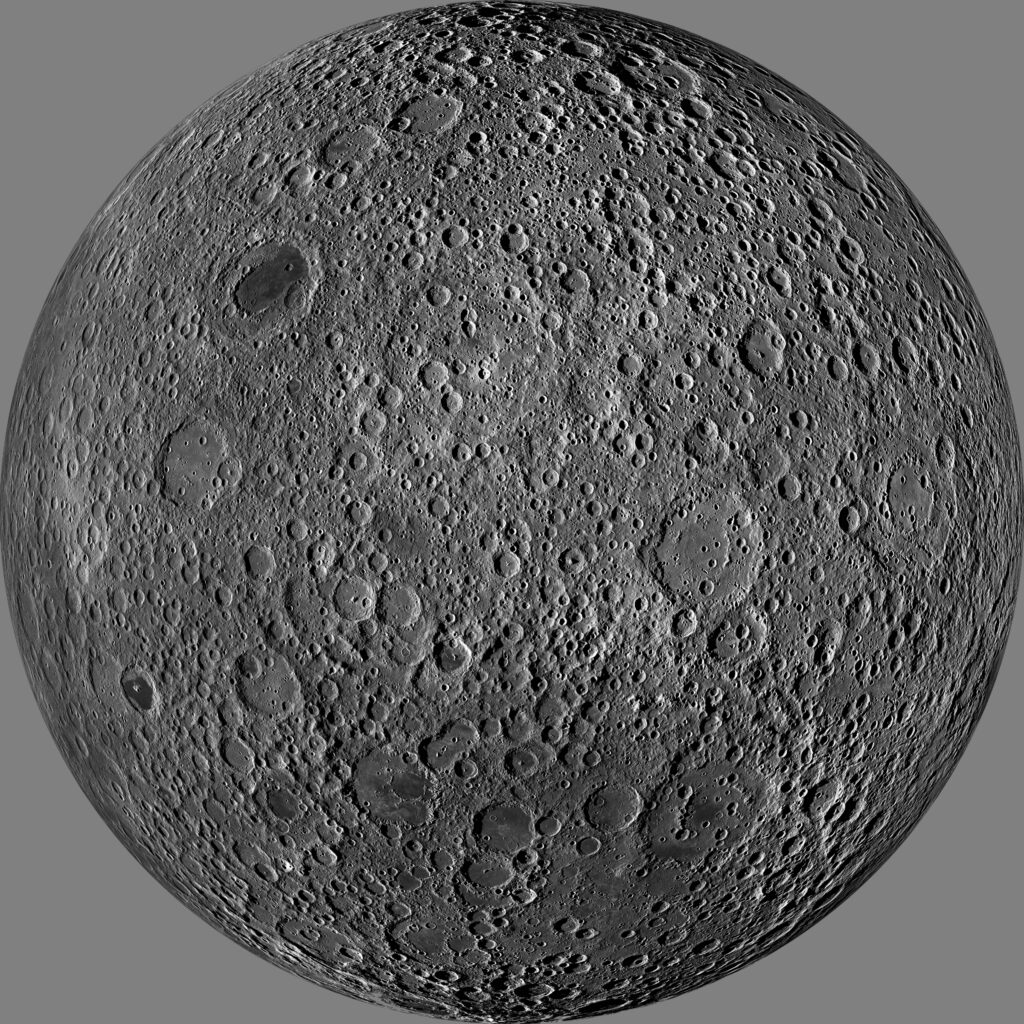
The Moon is in synchronous rotation with the Earth: she turns once on her axis in roughly the same time that she completes one orbit around the Earth. Because of this, broadly the same hemisphere is always turned toward us, though lunar libration allows an earthly observer to see slightly more than half of her surface over time. Before the age of spacecraft, humanity had never seen her far side.
This fact is extraordinarily rich symbolically. The Moon is changeable in phase, yet constant in face. She continually changes her light, but does not turn a wholly new face toward Earth. This is profoundly lunar. Her visible illumination changes, but her orientation remains bound by relationship. She is not freely mobile in the Mercurial sense, nor sovereign in the solar sense. She is relational, attached, habitual, and turned toward the world to which she belongs.
The near side of the Moon is the face known to earthly sight: the familiar disc of maria, highlands, shadows, and pale light. It is the public Moon—the Moon of memory, calendars, tides, poets, sailors, farmers, mothers, and ordinary observers. The far side, by contrast, remained hidden until the modern space age. It is not dark in the literal sense; it receives sunlight just as the near side does. But it is hidden from the Earth.
For this reason the phrase “the dark side of the Moon” is astronomically false, but symbolically expressive. The far side is not dark because it lacks light; it is “dark” because it is turned away from human sight. In this it resembles the hidden side of bodily life, memory, habit, sleep, instinct, and unconscious movement. The Moon always shows something, but never shows everything. She reflects light, yet preserves a hidden hemisphere.
From here arises naturally the Moon’s connection with mysteries, secrets, and hidden things. This should not be understood too Mercurially, as though lunar mystery were a cipher, a puzzle, or a clever riddle awaiting solution. Mercury seeks the key and translates the sign. The Moon conceals in another way: through nocturnal half-presence, memory, sleep, habit, bodily depth, unspoken feeling, and the invisible side of ordinary life. Lunar mystery is not an intellectual puzzle, but something near and not fully seen; familiar and not entirely revealed; present in life, yet remaining in shadow.
Modern lunar science deepens this distinction. The far side is not merely the same face turned away. Its crust is thicker, and it has far fewer of the broad dark maria that mark the hemisphere visible from Earth. The Moon is divided not only by appearance, but by structure. One side is more open to the great basaltic “seas” that formed the familiar lunar face; the other is higher, thicker, more heavily cratered, and more deeply concealed.
This is not a crude allegory, but symbolically it is fitting. The Moon rules what is near and familiar, yet she also preserves a hidden reserve. She belongs to ordinary life, but ordinary life itself has an unseen side: memory, sleep, bodily processes, inherited habit, and the unspoken underside of daily existence. Lunar astronomy gives the same lesson as traditional astrology: what is visible is real, but it is not the whole.
Tides, the Watery Body, and Moving Flesh
The Moon does not only reflect light. She moves the waters of the Earth. Her gravitational relation with Earth produces the tides, raising the oceans in rhythmic swelling and retreat. This is one of the most concrete astronomical confirmations of the Moon’s traditional connection with water, bodily fluids, change, and motion.
The tides show that the Moon does not act by command, law, or cutting violence, but by attraction and periodic response. She draws, lifts, releases, and draws again. Water answers her. The seas do not obey the Moon as subjects obey a king; they respond to her as living matter responds to rhythm.
This image is especially important because the human body itself is largely watery. In an adult, water commonly makes up roughly 55–60 percent of body mass, and the proportion is higher in infants. It fills the cells, blood, lymph, interstitial fluids, saliva, milk, sweat, urine, sexual fluids, and all the moist media without which the body cannot live. The lunar connection with water is therefore not limited to the sea. Through water it passes naturally into corporeality itself.
This should not be understood crudely, as though oceanic tides of the same magnitude were rising and falling inside the human body. The body is too small for that kind of literal tidal effect. But the symbolic logic remains powerful: if the Moon is the heavenly body that moves the waters of the Earth, then in traditional language she naturally becomes the mistress of all mutable moisture—not only external, but internal; not only marine, but bodily.
This is why the Moon rules not abstract “matter,” but the living body: moist, nourished, bleeding, sweating, drinking, excreting, nursing, retaining, and releasing. The body is not a stone, nor a dry geometrical form. It grows, swells, weakens, recovers, matures, ages, and dies. Its life passes through phases, just as the Moon passes through increase, fullness, waning, and disappearance.
This tidal action belongs not only to symbolic imagination. It is part of the physical structure of the Earth-Moon relationship. Through tidal interaction, Earth’s rotation gradually slows, and the Moon is slowly receding from the Earth. Her present recession is about four centimeters per year. The Moon, then, is not fixed forever at one distance. Even her bond with Earth is not static. It is a living relation—closer in the ancient past, now slowly withdrawing, yet still acting upon the waters and rotation of the planet.
This is a profound image of lunar change. The Moon remains bound to the Earth, but the bond itself develops through time. The companion slowly withdraws, yet continues to influence the body from which she recedes. Thus the Moon becomes an image not only of closeness, but of changing closeness: attachment, dependence, gradual separation, and continuing influence.
In traditional symbolism this naturally belongs to the Moon’s governance of birth, infancy, nursing, household life, travel, and change of condition. The infant is close to the mother, then slowly separates. The tide rises and withdraws. The traveler leaves home and returns. The body receives nourishment, spends it, and needs again. Lunar motion is not abstract motion. It is motion within bonds.
A World Without Weather: Craters, Memory, and the Surface of Impressions
The lunar surface preserves marks with extraordinary clarity. Because the Moon has almost no atmosphere, no rain, no rivers, no oceans, no ordinary weather, and no plate tectonics like Earth’s, ancient impacts remain visible across her surface for immense stretches of time. Craters, basins, ridges, scarps, and plains cover the Moon like a record of received blows and lasting impressions.
This sharply distinguishes the Moon from Earth. On Earth, water, air, vegetation, erosion, and geological circulation continually soften, bury, transform, and renew the surface. The Earth, as it were, digests its own history. The Moon preserves hers. She is not alive in the earthly sense, but she remembers.
Symbolically, this is especially important. The Moon is traditionally connected with memory, impressions, habits, and the retention of images. Her surface is almost visibly a field of memory: not smooth, not self-originating, but marked by what has happened to it. Impacts arrive from outside and leave enduring forms. In this the Moon resembles the receptive soul or body, receiving the impressions of experience and carrying them forward.
Here the astronomical resemblance between the Moon and Mercury becomes meaningful. Both bodies are heavily cratered; both preserve traces and marks; both lack the dense atmosphere that would quickly erase their history. But their symbolism differs. On Mercury, the marked surface readily becomes a field of signs, traces, inscriptions, and clues requiring interpretation. On the Moon, the marks are more bodily and mnemonic. They are impressions, scars, traces of received blows, and the visible texture of lived experience.
The Moon is not an empty mirror. She reflects light, but her body is marked. This is one of the important corrections supplied by astronomy. If we imagine the Moon only as a pure silver disc, we miss her real nature. She is pale and reflective, but also cratered, scarred, dusty, ancient, and exposed.
Even the lunar atmosphere—if the word may be used here at all—confirms this. The Moon has only an extremely thin exosphere, continually renewed by micrometeorite impacts, the solar wind, and surface processes. It is not a stable surrounding medium like Earth’s atmosphere. It is fragile, sparse, and constantly produced through contact. This suits the lunar nature very well: the Moon does not hold a strong independent envelope around herself. She is open, receptive, and continually touched by what reaches her.
Dust, Regolith, and the Powder of Time
The Moon is covered in regolith: a layer of dust, broken rock, glassy particles, and pulverized material produced by countless impacts over immense time. This is not soil in the fertile earthly sense. It contains no living humus, no organic softness, no vegetation, no worms, no rain-soaked richness. It is dry powder made from shattered stone.
Yet symbolically this lunar dust is not strictly Saturnian. Saturn signifies age, dryness, death, and hard limitation. Lunar regolith is also connected with antiquity and impact, but its quality is different: it is the powder of received contact. It is matter broken, softened, and loosened by repeated encounters. It is not fertile earth, but the Moon’s own form of surface softness.
This helps clarify the difference between lunar softness and Venusian softness. Venus softens through pleasure, union, moisture, and desire. The Moon softens through repetition, contact, bodily need, and the gradual wearing down of form into something more receptive. Lunar matter is not polished into ornament; it is ground into dust.
This dusty surface also carries a practical warning. From Earth, the Moon may seem smooth and serene, but her surface is harsh to bodies and instruments. Lunar dust is fine, abrasive, clingy, and unpleasant. Symbolically, this again prevents us from reducing the Moon to sentimental softness. The Moon is gentle in light, but not gentle in every physical condition. Her world is pale, receptive, and near, but also exposed, sharp, dusty, and difficult.
For this reason the Moon belongs not to luxury, but to bodily necessity. She is the planet of the infant, the nurse, the traveler, the sailor, the common road, the wet field, the kitchen, the bed, the public crowd, and immediate need. Her surface is not a garden. It is a record of survival under open exposure.
Hidden Ice and the Preservation of Moisture
At first sight, the Moon appears utterly dry. Her surface has no seas, rivers, rains, clouds, or visible springs. The ancient “seas” of the Moon are not bodies of water, but basaltic plains. Yet modern exploration has shown that water is present on the Moon in subtler forms. Ice exists in permanently shadowed polar regions, and water molecules have also been detected on sunlit portions of the lunar surface.
This is one of the most symbolically powerful discoveries of modern lunar science. The Moon, traditional ruler of moisture, is not a watery world in the ordinary earthly sense. She carries no open oceans. She preserves moisture in a hidden, rare, protected, and difficult manner. Lunar water is not abundant flowing life; it is concealed, trapped in shadow, scattered, or chemically bound.
The polar cold traps are especially important. In permanently shadowed craters near the lunar poles, sunlight never reaches the floor directly. There, in extreme cold and darkness, ice can persist over immense periods of time. This is not Venusian moisture, lush and sensuous; not Jovian fertility, broad and beneficent; and not earthly water openly circulating through rivers and rain. It is lunar moisture in its most secret form—preserved in darkness, protected by cold, hidden at the edges.
Here we find a precise astronomical image of the Moon’s traditional nature. She is moist, but not necessarily lush. She nourishes, but often through small quantities, hidden reserves, bodily fluids, milk, dew, and immediate need. Her water is not the royal river or the fertile Jovian rain. It is the preserved moisture of the body, the milk in the breast, the dew before dawn, the salt of the sea, the fluid in the womb, the hidden ice in shadow.
The detection of water on sunlit portions of the Moon adds another layer. Even where the Moon appears exposed to light and dryness, traces of water may remain bound within the material of the surface. Symbolically, this is lunar persistence: moisture not always visible as flowing water, but present as hidden capacity, a secret reserve within apparently dry matter.
Birth from Impact and the Body Gathered from Rupture
The most widely accepted modern model of the Moon’s origin points to a violent beginning. Early in the history of the Solar System, a large body—often imagined as Mars-sized, or in some variants several bodies in a series of collisions—struck the young Earth. From the molten and vaporized debris of this destructive event, the Moon eventually formed.
This is an astonishing image. The Moon, planet of birth, body, mother, milk, infancy, and earthly life, was herself likely born from rupture. She arises not from calm celestial perfection, but from collision, heat, broken matter, and the re-gathering of debris into a new body.
Here the lunar principle appears in one of its deepest forms. The Moon does not create from nothing. She receives, gathers, forms, cools, and gives body. Her material is not purely self-generated. It is inherited, torn away, mixed, and assembled again. This is very close to the traditional lunar power of bodily formation: conception, gestation, growth, nourishment, and the taking of form in matter.
In this sense, the origin of the Moon is not Martial, even though impact and rupture are present. Mars breaks and cuts. The Moon receives the broken material and becomes a body. The violence belongs to the event; the lunar principle appears in the later formation, cooling, gathering, and embodiment. Matter thrown out from Earth becomes companion, luminary, calendar, tide-maker, and mirror.
This also deepens the Moon’s relation to Earth. She is not simply a foreign body accidentally captured into orbit. In the dominant modern picture, she is born from the earliest history of the Earth itself. Her body is bound to Earth not only by orbit, but by origin. Symbolically, this is extraordinarily fitting: the Moon is the child of Earth and catastrophe, the companion born from the body of the world.
The Visited Moon: The Human Body at the Celestial Boundary
The Moon holds a special place among all the traditional planets for another reason: she is the only one of the seven traditional planetary bodies that human beings have visited. Neither Saturn, nor Jupiter, nor Mars, nor Venus, nor Mercury, nor the Sun has been directly experienced by the human body. Their natures are revealed through observation, calculation, myth, light, motion, and telescopic science. The Moon, however, became a place where human beings stood, walked, left footprints, gathered stones, breathed dust carried into the module, and encountered a heavenly body as a physical environment.
This is not an incidental detail, but a powerful lunar fact. The Moon truly is the nearest celestial boundary of earthly life. She is heavenly enough to be another world, yet near enough to be reached by the body. In this sense she is not an abstract planetary idea, but a threshold: the first place beyond Earth where human embodiment met celestial matter.
The descriptions of the Moon given by the astronauts are especially revealing. They did not find a moist, soft, fertile world, but a magnificent desolation: a gray, dusty, airless, silent surface beneath a black sky. This matters because it does not cancel the traditional moisture of the Moon; it protects it from sentimental distortion. The Moon is not Venus. Her softness is the softness of reflected light, bodily receptivity, memory, milk, sleep, habit, and need—not of luxury, pleasure, or a fertile garden.
Lunar dust also proved not to be harmless soft powder, but sharp, clingy, irritating matter. It stuck to spacesuits, entered the lunar modules, and irritated eyes, noses, and throats. This again shows the Moon’s double nature: she is near and accessible, but not wholly hospitable; reflective and pale, yet bodily harsh; smooth and quiet from Earth, yet on contact full of dust, friction, dryness, and the traces of impact.
The movement of the human body on the Moon is symbolic as well. In weaker lunar gravity, the body does not walk as it does on Earth. It bounds, adapts, searches for a new rhythm, and leaves clear footprints in the powdery surface. This is not solar dominion, nor, in the deeper sense, Martial conquest. It is lunar corporeality at the threshold: the body separated from Earth, yet still carrying earthly life inside the suit; the human being standing on a heavenly body, but surviving only through the shell, air, water, memory, and care brought from Earth.
The visited Moon therefore does not destroy the traditional image of the Moon; it makes it denser. It shows that the nearest celestial body does not become earthly simply because it is close. It remains alien, airless, dusty, and dangerous. Yet precisely this nearness makes it lunar: the Moon is not a distant abstraction, but the boundary where the earthly body first touches the heavens.
Extreme Temperatures and the Absence of a Stable Medium
The surface of the Moon endures sharp oppositions of heat and cold. Without a dense atmosphere to distribute heat, soften light, carry weather, or protect the ground, the lunar day and lunar night are harshly divided. Sunlit regions may become intensely hot, while shadowed regions can become unimaginably cold.
At first glance this may seem to contradict the traditional description of the Moon as moderately cold and moist. But the contradiction is only superficial. The astronomical Moon is not cold and moist because her surface resembles a wet earthly meadow. Her traditional qualities arise from her role in the visible heavens and in earthly life: she governs moisture, tides, bodies, growth, milk, birth, and change. The physical lunar surface, by contrast, shows what happens to a receptive body without the living medium of Earth.
This distinction matters. Astronomical uninhabitability is not the same as astrological temperament. Venus does not become morally evil because her surface is hostile to human life; Mercury is not simply fiery because he is close to the Sun; Mars is not reducible to red stone because of his color. In the same way, the airless surface of the Moon does not abolish her traditional moisture. It only refines our understanding of it.
The Moon is not the source of earthly moisture as a chemical reservoir. She is the celestial regulator and image of moisture in embodied life. She moves waters at a distance; marks cycles of birth; receives sunlight; shows growth and waning. Her own barren and exposed surface reminds us that lunar moisture is relational. It is not self-sufficient abundance. It appears through connection: with Earth, with bodies, with tides, with birth, with habit, and with need.
The absence of a dense atmosphere also strengthens her connection with receptivity. The Moon has no thick protective veil. She is open to radiation, micrometeorites, extreme temperatures, and impact. She receives directly. This is not the closed veil of Venus, nor the atmospheric grandeur of Jupiter, nor the fiery self-radiance of the Sun. It is the exposed receptivity of the nearest body—pale, marked, silent, and continually altered by contact.
The Moon as Companion, Mirror, and Measure
When these astronomical features are considered together, the traditional nature of the Moon becomes not weaker, but clearer. She is nearest to Earth; shines by reflected light; visibly changes through phases; is synchronously bound to Earth; moves the tides; has a relation to bodily monthly rhythms; preserves marks; hides ice in darkness; was born from violent terrestrial rupture; has been visited by the human body; and remains asymmetrical, with one familiar face and another hidden side.
These are not random facts. They form a coherent lunar image.
The Moon is companion, not ruler. Mirror, not source. Body, not abstract principle. Habit, not command. Need, not self-sufficient fullness. Reception, not emission. Motion, not permanence. Memory, not invention. Hidden moisture, not open abundance. The mystery of the near, not the riddle of the far. A visible face, not the whole truth.
Thus modern astronomy does not replace traditional symbolism; it gives it a new field of contemplation. The Moon remains what the old astrologers knew her to be: the nearest heavenly power of change, body, moisture, memory, common life, and earthly circumstance. But now the same principle can be seen not only in her light and phases, but also in her surface, orbit, origin, hidden water, tidal bond, human visitation, and uneven body.
The Moon is not merely a beautiful lamp of the night. She is the measure of embodied change: the celestial mirror through which life receives light, takes form, desires, remembers, conceals, changes, and returns.