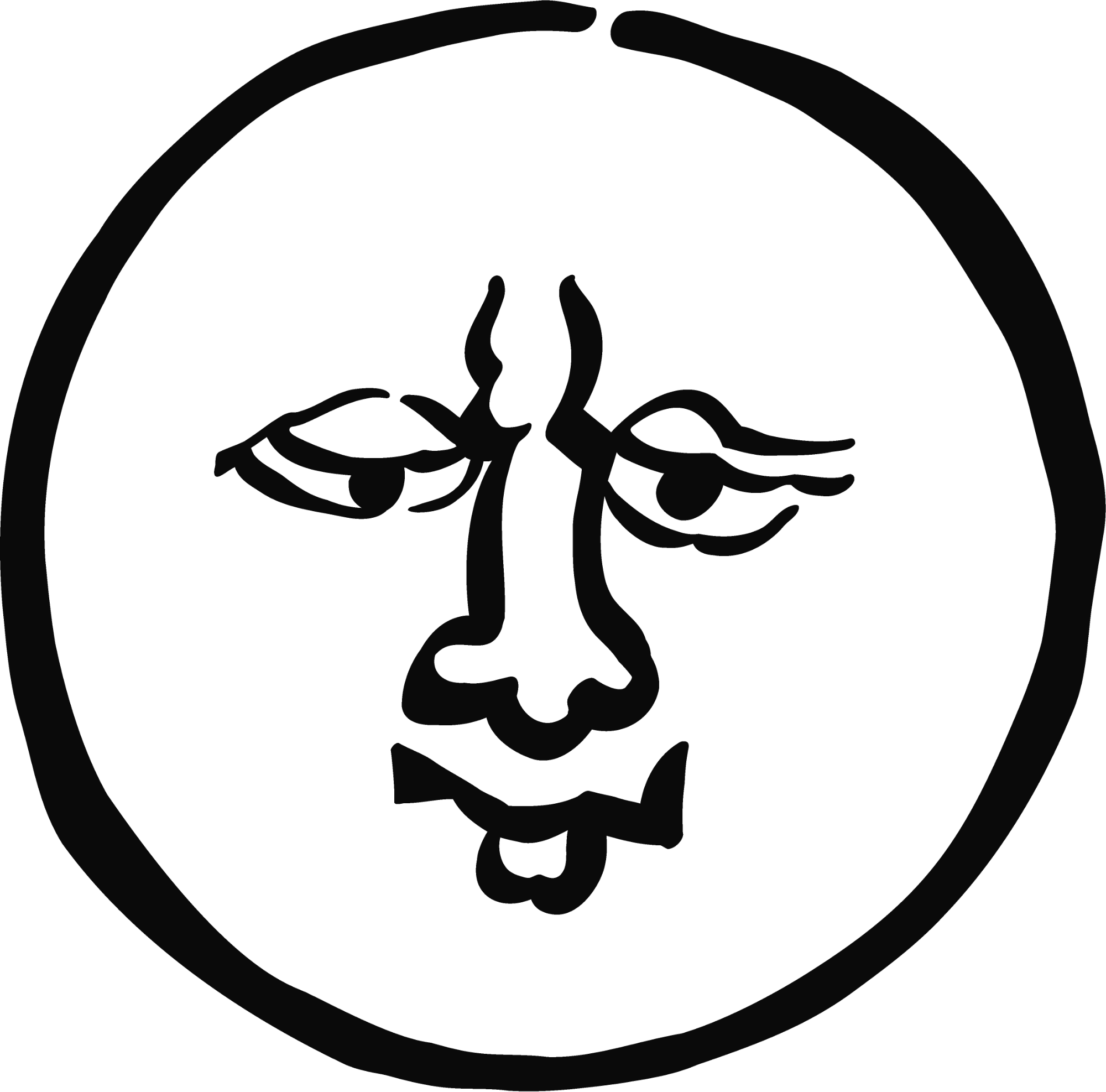

Latin Names:
- Populus: People · Folk · Common People · Populace · Public · Public Body · Civic Body · Community · Commonwealth · Population · Inhabited Region · District · Territory · Multitude · Crowd · Throng · Mass · Host · Swarm · Public Place · Open Street · Poplar Tree;
- Congregatio/Aggregatio: Gathering Together · Assembling Together · Assembly · Congregation · Union · Society · Association · Community · Collective Body · Collected Mass · Aggregation · Joining to a Group · Being Gathered Into One.
Greek Name: People · Common People · Commons · Public · Public Body · Civic Body · Community of Citizens · Popular Assembly · Inhabitants · Inhabited District · District · Land · Deme · Township · Commune · General Public · Many (δημος — Dēmos).
Arabic Name: Group · Community · Assembly · Congregation · Gathering · Gathered Body · Group of People · Band · Party · Company · Collective Body · Society · Association · Fellowship · Crowd · Aggregate · People Gathered Together (الجماعة — al-Jamaʿa).
Hebrew Name: Congregation · Assembly · Gathered Assembly · Community · Gathered Community · Communal Body · Collective Body · Public Assembly · People Gathered Together · Community Gathered as One (קהילה — Qehillah).
Alternative Names: Congregation · Multitude · Double Way.
Image: a crowd.
Element: 🜄 water.
Planet: Waxing or Full E Moon.
Zodiac Sign: d Cancer.
Natural Property: moderate or middling; traditionally counted among the firm, stable, and strong figures.
Inversion: Populus.
Complement: Via.
Body System: endocrine system (sometimes Lætitia).
Anatomy: chest and breasts; in men, the left eye; in women, the right eye.
The Master Signification of Populus
The People, the Crowd, and the Many
Populus means the people, the crowd, the multitude, the mass, the swarm, the public, the community, and the collective body. It is not the figure of one person, one action, or one private will. It is the figure of many.
Even the shape of Populus shows this meaning. It has eight points—the greatest number any geomantic figure can contain. All four lines are doubled: Head, Neck, Body, and Feet. No part of the figure stands alone.
The name Populus points to people as a public body: the populace, the common people, the inhabitants, the civil body, the crowd, the mass. The related Latin names Congregatio and Aggregatio add the idea of gathering. Separate persons come together and become an assembly, a union, an association, a community, or a collected body. Congregatio suggests a calling together and a shared presence; Aggregatio suggests addition, accumulation, and the formation of a mass out of individual parts.
The Greek Dēmos gives the figure a civic and public tone: the people, the body of citizens, the inhabitants of a district, the general public. The Arabic al-Jamaʿa and the Hebrew Qehillah strengthen the sense of community, congregation, assembly, and people bound by common belonging. For this reason, Populus may signify not only a faceless crowd, but also a family, a religious community, a public gathering, a group of allies, or people gathered into one body.
In personal questions, Populus often points to the querent’s immediate circle: family, friends, guests, neighbors, household members, or a company of people. In broader questions, it may signify society, the public, the state, the people, the population, or public opinion.
In national or international questions, Populus may show the people in contrast to their rulers. In the chart, ruling power itself is often shown by Fortuna Major, while Populus shows those who are ruled: the population, the citizen body, the public background, the mass of people.
Populus may also signify an inn, a crowded place, a public location, a busy street, a mass event, a market, an assembly, or any matter that depends not on one person alone, but on many participants.
In a damaged context, the same nature may appear as a gang, a mob, a pack, a crowd pressing against the querent, or a mass of people acting under one contagious mood.
Populus is the figure of multiplicity: many people, many voices, many faces, many opinions, many reflections, gathered into one field.
Populus and Via
Populus and Via are the two lunar figures. Both are connected with Cancer, the Moon, and Water, but they must not be confused.
Via is the road. Populus is the crowd. Via moves. Populus gathers. Via is solitary. Populus is multiple. Via goes in a line. Populus stands as a mass. Via is the waning Moon. Populus is the waxing or full Moon.
Via signifies motion, passage, travel, departure, transition, alteration, and the solitary path. It does not gather the many; it goes.
Populus does not primarily show motion as such, but a mass that has gathered. It may move, but it does not possess a clear direction of its own. Like a crowd, it receives impulse from another figure, another person, another event, another mood, or an external force.
Via is a line of movement. Populus is a field of many.
Crowd, Sea, and Swarm
Populus is a figure of Water. For that reason, the crowd in this figure is closer to the sea than to a stone wall.
The sea is made of countless drops, yet a wave moves as one body. A crowd is made of many people, yet at a certain moment it can rise, retreat, surge, turn, or move in one direction. A single person in the crowd may think he is acting for himself, while the larger motion of the mass is already carrying him along with others.
One of the meanings of Populus is swarm. This is an important image because a swarm is not merely a multitude; it is a multitude that begins to act as one whole. A swarm of bees, a colony of ants, a flock of birds, or a school of fish does not require one visible ruler giving orders to each member. Each participant responds to nearby signals: movement, scent, pressure, distance, danger, food, obstacles, or the behavior of neighbors. Out of these small reactions, the larger movement of the whole emerges.
Populus works in the same way. One person may know very little, but many people together create a field of perception. A crowd hears a rumor, feels fear, catches hope, receives a mood, repeats a gesture, and amplifies a signal. What appears is not personal will, but collective reaction.
In its better form, Populus becomes collective sensitivity. Many people can gather more signs than one person; a community can preserve memory; a family can sense danger; a people can detect injustice; an assembly can arrive at a judgment beyond the private opinion of one member.
In its worse form, the same mechanism becomes mass contagion. The crowd reflects another’s fear, anger, passion, or falsehood, and then multiplies it. Populus then becomes not the wisdom of the many, but a swarm seized by one impulse.
This is why Populus has no simple moral quality of its own. It reflects what enters the mass. If the right signal enters the swarm, the multitude may act almost like an intelligent body. If a false signal enters, the same multitude may spread error faster and more forcefully than any single person could.
The Lunar Mirror and Borrowed Light
Populus belongs to the waxing or full Moon. The Moon does not shine with its own light; it reflects the light of the Sun. As the Moon waxes, its light increases. At the Full Moon, it becomes a complete mirror of solar light.
This is also the nature of Populus. It does not create a new quality out of itself. It receives, reflects, repeats, and spreads what it has taken in.
This applies not only to the symbolism of the heavens, but also to the nature of society. A crowd often lives by a light that is not its own. It reflects another idea, another fear, another hope, another image of authority, another slogan, another pain, or another desire. It may believe that it wants something by itself, when its desire has already been shaped by what it reflects.
Here the nature of Cancer is important. Cancer is a commanding sign, but also a mute one. This gives Populus a deep paradox: the crowd may demand, pressure, choose, reject, support, and command by its number, while not always being able to say clearly what it wants. It commands by mass, but does not always speak in its own voice. It desires, but often does not know who placed that desire within it.
For this reason, Populus can be an image of the silent majority. This is not merely a political phrase, but a deeper symbol of a great number of people who may not speak loudly, yet determine the field by their presence, number, and weight. They may not formulate the idea, but they reflect it. They may not create the light, but they make that light visible in the world.
In its higher sense, Populus is society rightly reflecting order, common good, tradition, memory, and justice. In its lower sense, it is the crowd living by reflected fear, borrowed passion, or an imposed image.
The philosophical question of Populus is not only what the crowd wants. The deeper question is: whose desire does it reflect? If the Moon has no light of its own, the crowd often has no clear center of its own. It may become a mirror of truth, but it may also become a mirror of manipulation.
Reception and Multiplication
The nature of Populus is especially clear in the reception of figures. When Populus is joined to another figure, the result is the same figure again. Populus does not change the other figure’s nature; it returns it in an expanded, multiplied, and collective form.
For this reason, Populus acts as a mirror and a multiplier. With a fortunate figure, it spreads good. With an unfortunate figure, it spreads harm. It makes the quality of the other figure more general, more public, more repeated, or more socially visible.
In this sense, Populus is neutral. It is good with the good and bad with the bad. Its strength does not lie in its own will, but in its power to reflect, gather, multiply, and spread.
The Full Moon also gives the image of fullness. The waxing Moon still desires light; the Full Moon, for a moment, has all the light it sought. Populus may therefore show fullness, mass presence, complete reflection, and collective weight. But it is still reflected light, not its own light.
Middle Nature, Inversion, and Modality
Populus is traditionally counted among the firm, stable, and strong figures, but its stability is not the same as the stability of figures such as Fortuna Major, Tristitia, or Caput Draconis.
Populus is sometimes placed in a middle or moderate class together with Via, Conjunctio, and Carcer. These four figures share an important property: unlike the other twelve figures, they do not change when inverted. If Populus is inverted, it remains Populus. If Via is inverted, it remains Via. The same is true of Conjunctio and Carcer.
This makes them unusual. They do not form an ordinary inverted pair with another figure, but return to themselves. Their nature is therefore less simple: they stand between stability and mobility, between change and self-identity.
In the case of Populus, one must distinguish the stability of the geomantic figure from the modality of its zodiacal sign. As a figure, Populus is traditionally stable or moderate. As a figure of Cancer, however, it belongs to a movable sign.
Therefore, in questions of timing, illness, weather, and duration, Populus should not be read only through the idea of mass or inertia. The modality of Cancer and the other testimonies of the chart must also be considered.
Public Opinion, Rumor, and Many Voices
Populus often shows that a matter has moved beyond private will. The question may depend on family, a group, the public, clients, witnesses, the people, the community, an audience, or those surrounding the querent.
If Populus appears as Judge, the outcome is often tied not only to the querent himself, but to the reaction of others. This is especially important in questions of reputation, public appearance, sales, voting, legal conflict, family conflict, public response, or any matter whose result depends on many participants.
Here an old rule is especially fitting:
And observe that, in all questions, when Populus is found several times, then it is a sign that many are talking about the querent.
Lectura Geomantiæ
When Populus repeats in the chart, there may be much talk around the querent. This may be gossip, public attention, family discussion, talk within a community, conversation at work, or discussion among people watching the situation. Populus is not always direct action. Sometimes it is the noise of many voices.
In questions about rumors, news, dreams, and signs, Populus requires caution. It may show spread, repetition, and many voices, but not necessarily truth. What many people say is not always true. The crowd may reflect truth, but it may also reflect error.
Person of Populus
The person signified by Populus must be distinguished from the person signified by Via. Both figures are lunar and Cancerian, but Populus is more gathered, full, social, and receptive to its environment. Via is more solitary, mobile, road-like, and changeable.
The appearance of Populus often has a lunar-Cancerian basis: middle or shorter stature, roundness, a tendency toward fullness, softness of body, a notable chest or upper body, a round or long face, dark blond or dark hair, pallor or a complexion darker than expected from the person’s background. The body may be strong and mobile, but not necessarily beautiful. The face is often more attractive than the body.
There may be large or irregular teeth, small or unusual eyes, a mark near one eye, or some difference between the eyes in size, color, or expression. Men may have a thick beard. The arms may be long, while the hands and feet may be short, fleshy, or heavy.
In character, Populus is passive, receptive, and impressionable. Such a person easily takes on the mood of the family, friends, group, environment, or crowd. He may absorb the opinions and habits of those around him, sometimes without noticing where his own desire ends and the voice of the group begins.
He often finds it easier to act by suggestion than to set a direction by himself. His strength is not solitary will, but the ability to belong to a field, sense the mood of people, understand the atmosphere, and function within a group. He may be family-oriented, friendly, sociable, attached to home, companions, community, and familiar surroundings.
The emotions of this person are often stronger than abstract reason. In a good condition, this gives empathy, softness, care, and social sensitivity. In a damaged condition, it may give laziness, unreliability, moodiness, complaint, dependence on others, or excessive susceptibility to collective opinion.
Populus may also give love of water, shores, rivers, lakes, the sea, moist places, family settings, gatherings, communities, and crowded spaces. Such a person may feel more alive among people, inside a group, at home, in the family, in a familiar community, or near water.
Populus in Spiritual Questions
In spiritual questions, Populus may signify a community, church, congregation, collective prayer, tradition, inheritance, folk religion, or faith received through family and society. This is not the figure of the solitary prophet in the wilderness. It is the figure of a people who gather, repeat, remember, and reflect.
In a good sense, Populus shows the strength of community. The person is not alone. He is held by prayer, tradition, family, ritual, collective memory, and the faith of many. He receives light not only personally, but through belonging to a larger body.
In a bad sense, Populus may show spiritual passivity: a person believes because everyone believes, repeats because it is customary, and fears stepping outside the common opinion. Then the community is no longer a vessel of memory, but a crowd in which personal conscience dissolves.
The higher image of Populus is the Full Moon as perfect reflection. In that condition, the Moon no longer seeks the light it lacks; it is filled with it and reflects it in the greatest fullness possible. Spiritually, Populus may therefore show not personal will, but the right reflection of a higher order through community, tradition, or the memory of a people.
The spiritual formula of Populus is simple: not every crowd is truth, but truth may live in the people who preserve it.
General Judgment
Populus is the figure of the people, the crowd, the multitude, the assembly, the swarm, the public body, the family, the community, and the collective field. It shows not one person, but many; not solitary action, but collective presence; not direct will, but reflection, multiplication, and spread.
It differs from Via as a crowd differs from a road. Via goes. Populus gathers. Via shows solitary movement. Populus shows a multitude receiving the shape of an external impulse.
Populus is neutral. It is good with good figures and bad with bad ones. Its reception shows this mathematically: when joined to another figure, Populus returns that same figure. It does not create a new will, but reflects, multiplies, and spreads what it receives.
In questions, Populus may indicate family, friends, the people, society, the public, an inn, a crowd, mass participation, public opinion, rumor, discussion, or a result that depends on others.
Its strength is not inward resolve, but mass, reflection, repetition, and watery receptivity. It is the figure of the silent majority, the lunar mirror, the swarm, and the gathered multitude.
When a question requires decisive personal action, Populus may be weak. When a question depends on support, the public field, family, group, people, repetition, mass participation, or multiple confirmation, Populus may become a very important testimony.
Populus does not say, “I go.” It says, “We are here.”