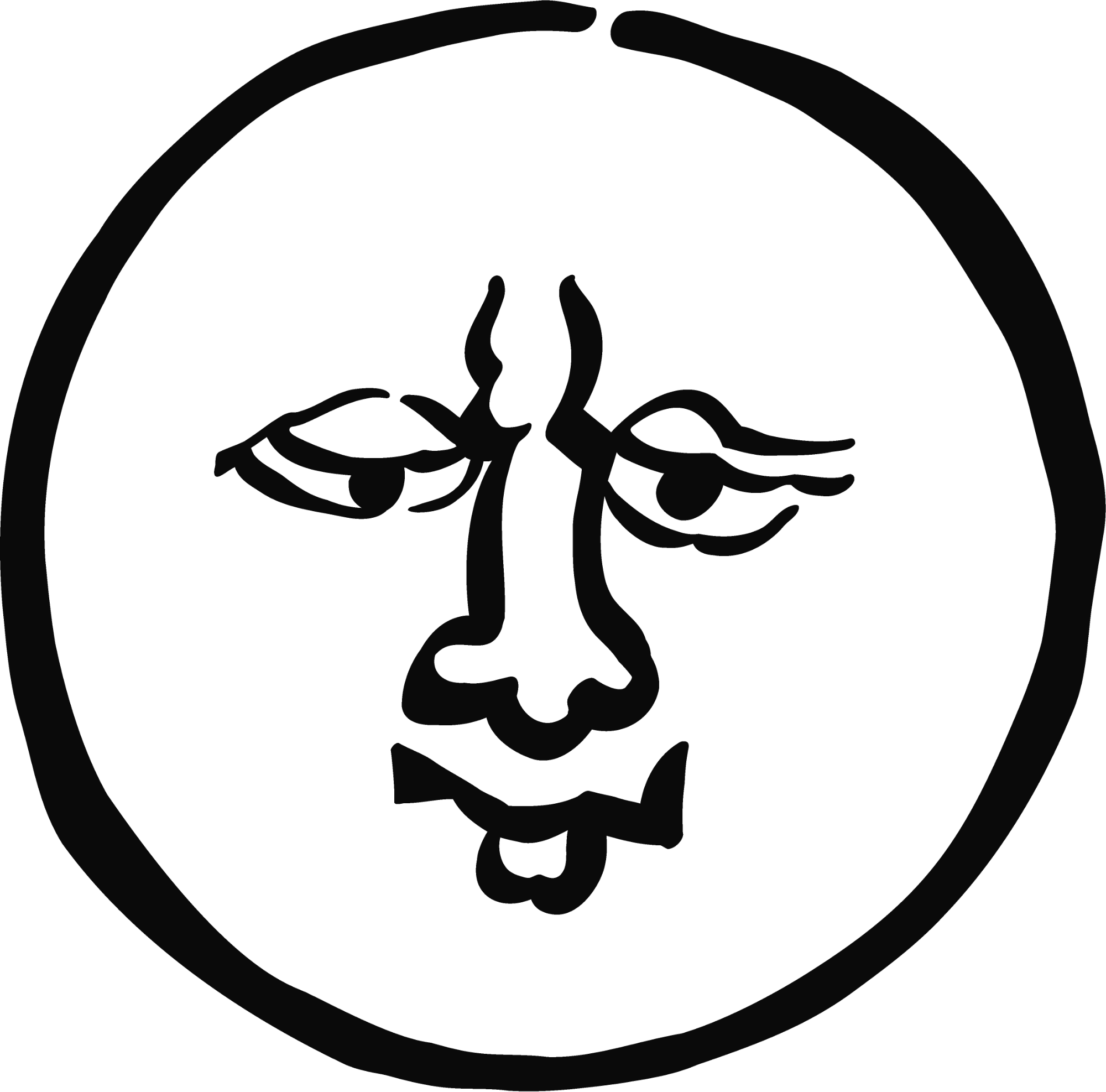

Latin Names:
- Puer: Boy · Child · Lad · Youth · Son · Young Servant · Slave · Bachelor;
- Imberbis/Inberbis: Beardless · Beardless One;
- Gladius Erigendus: Sword to Be Raised · Sword to Be Erected · Upright Sword · Erect Sword · Raised Sword · Arousing Sword;
- Flavus: Golden-Yellow · Reddish-Yellow · Tawny · Flame-Colored · Flaxen-Colored · Golden.
Greek Name: Beardless One · Sparse-Bearded One · Smooth-Cheeked One · Hairless One (Σπανος — Spanos).
Arabic Name: Beardless One · Sparse-Bearded One · Thin-Bearded One · Youth with Little or No Beard · Swordfish or Sawfish (الكوسج — al-Kawsaj).
Hebrew Name: Fighter · Warrior · Combatant · One Who Fights · One Who Wages War (נלחם — Nilcham).
Alternative Names: Beardless · Yellow · Warrior · Man · Sword.
Image: a sword; a male figure with exaggerated testicles.
Element: 🜂 fire.
Planet: F Mars, especially in its diurnal expression.
Zodiac Sign: a Aries.
Natural Property: mobile, unstable, and weak.
Inversion: Puella.
Complement: Albus.
Sense: sight (sometimes Fortuna Major).
Body System: muscular system.
Anatomy: the head from the crown to the mouth, the brain, the left ear, the right nostril.
Human Significations: boy, man, child, student.
The Master Signification of Puer
Man, Youth, Sword, and the First Blow
Puer is the figure of the man, the youth, the warrior, the sword, and sudden action. Its nature is Martial, fiery, direct, and restless. It does not wait, weigh, soften, negotiate, or mature gradually. It moves. It strikes. It enters the matter by force.
The Latin name Puer literally means a child, boy, youth, son, young servant, slave, or bachelor. For this reason, in particular questions the figure may signify a son, page, servant, hired worker, young man, male lover, or unmarried man. Yet the meaning of Puer is not limited to youth. In geomancy, Puer is the natural significator of man as such—not only of a boy or young man, but of a male person in general.
Thus Puer may also signify an old man, if his role, character, condition, or behavior corresponds to the nature of the figure: direct, sharp, Martial, combative, sexual, forceful, impulsive, or coercive.
In this sense Puer forms a natural pair with Puella. If Puer is inverted, Puella appears. Therefore, when the figures are used to signify human sex, Puer naturally points to a man, while Puella points to a woman.
Because Puer belongs to Mars and resembles a sword in form, it may also signify a soldier, warrior, fighter, military man, armed servant, guard, police officer, violent person, or anyone who acts by force. Sometimes it signifies not a person, but the weapon itself: a sword, knife, blade, spear, firearm, surgical instrument, needle, cutting tool, or any sharp object that pierces, cuts, separates, or penetrates.
The Hebrew name of this figure, Nilcham—"the fighter" or "the one who wages war"—states this directly. Puer is not merely youth, but armed youth. It is not merely masculinity, but masculinity in motion, directed toward action, rivalry, conquest, desire, or battle.
Mars, Aries, and Direct Action
Puer is Mars in Aries. From this come its frankness, aggression, initiative, and kinetic force. Mars acts through heat, dryness, pressure, incision, impact, rupture, and the overcoming of resistance. Aries adds the first impulse, the forward movement, the beginning of action, and the refusal to wait until everything is safe.
For this reason, Puer signifies initiative, courage, readiness, boldness, leadership, decisive action, and the ability to confront danger. It shows the person who does not merely think about a problem, but attacks it. It is the soldier advancing, the surgeon making the incision, the athlete entering the contest, the worker taking up the tool, the lover beginning pursuit, the plaintiff initiating the case, or the leader forcing events into motion.
On the positive side, Puer gives enormous energy. It can bring enthusiasm, bravery, speed, muscular effort, directness, and the ability to act where others hesitate. In questions where action, courage, struggle, competition, sexual pursuit, military effort, surgery, emergency intervention, or immediate change is required, Puer may be useful and even necessary.
Yet it remains a Martial figure. Even when useful, it rarely acts gently. It helps through incision, pressure, coercion, heat, penetration, separation, impact, or the disturbance of the former order. Its benefit is often the benefit of necessary harm: the knife that removes disease, the soldier who repels an enemy, the judge whose sentence is enforced, the blow that breaks an obstacle, or the conflict that makes further delay impossible.
Impulse, Violence, and Lack of Measure
The negative side of Puer is easy to see. The same force that gives courage also gives haste. The same directness that may appear as honesty becomes rudeness. The same initiative that begins the matter may lack the patience to complete it. Puer acts before thought has finished its work.
In unfavorable charts, this figure may show impulsive, hasty, aggressive, quarrelsome, intrusive, coercive, or violent behavior. It may signify shouting, boasting, noise, provocation, insolence, sexual impatience, lack of tact, and poor self-control. It is the young warrior who mistakes motion for victory and confidence for wisdom.
When joined with more harmful testimonies, Puer may indicate conflict, violence, cruelty, bloodshed, war, injury, weapons, coercion, or forced change. It does not always mean literal violence, but it always introduces a field in which resistance is met not with patience, but with pressure.
The old rule that Puer is favorable in love and war must be understood precisely. It is chiefly true when Puer represents the querent or the querent’s side of the matter. In that case, the sword is in the querent’s hand: he receives courage, initiative, passion, force, and the ability to act.
But if Puer signifies the opponent, rival, open enemy, or another person represented by the seventh house, the meaning changes. Then Gladius Erigendus—the "raised sword"—is raised against the querent. When someone raises a sword against you, this is rarely a good sign. In a love question, such a Puer may signify not the querent’s passion, but another person’s aggression, sexual pressure, forceful pursuit, or crude desire. In a dispute or war, it may show an active opponent, an attack, a threat, or force applied by the other side.
Therefore Puer may be favorable in love and war, but not automatically. One must always ask: whose hand holds the sword?
Beardless One
Many traditional names of Puer emphasize beardlessness. The Latin Imberbis, the Greek Spanos, and the Arabic al-Kawsaj all point to the same image: a beardless, sparse-bearded, smooth-cheeked, or thin-bearded person. This is not a decorative detail, but part of the figure’s inner nature.
Puer is a masculine figure, but symbolically it is not connected with the settled weight of age. Rather, it shows raw, unformed, and not-yet-mastered masculine force. It possesses the strength of Mars, but not always discipline, foresight, measure, or stable judgment. It may be courageous, passionate, strong, and sexually active, yet its masculinity often remains sharp, impulsive, and immature in its manner of expression.
From this arises the contrast with Lætitia, which in questions of appearance may show bearded men. Lætitia rises upward with Jovian fullness, growth, and fertile expansion; Puer thrusts forward with Martial heat, sharpness, and force. One figure grows into abundance; the other cuts a path through action.
The Arabic al-Kawsaj is especially expressive because it may also mean swordfish or sawfish. This additional meaning fits Puer remarkably well. The figure resembles a sword; Mars rules weapons and cutting; and the swordfish or sawfish gives a living image of a sharp, projecting, blade-like creature. Thus al-Kawsaj gathers several symbolic layers at once: the beardless or thin-bearded person and the sharp creature marked by a sword-like projection.
Yellow, Gold, and the Exaltation of the Sun
It is sometimes said that only two geomantic figures explicitly show color: Albus, the white figure, and Rubeus, the red figure. This is not entirely correct. One of the Latin names of Puer is Flavus, which may mean yellow, golden-yellow, reddish-yellow, dark yellow, flame-colored, flaxen, or golden.
Therefore Puer may signify something yellow, golden, tawny, fiery, or reddish-yellow. This color does not contradict its Martial nature. Aries, the sign of Puer, is the exaltation of the Sun. In Aries, solar fire is raised, intensified, and made heroic; yet it is not the stable royal fire of Leo. It is the young fire of spring: the heat that begins, pushes, rises, and forces life out of dormancy.
The yellow or golden color of Puer should therefore be understood as solarized Mars: bright, hot, bold, active, and potentially dangerous. It may show a golden weapon, yellow clothing, reddish or sandy hair, a reddish-yellow complexion, flame color, or the aggressive brightness of a person who wants to be seen, recognized, heard, or challenged.
The Sword of Judgment and the Knife of Surgery
Puer has an important symbolic meaning in legal and medical questions. In legal matters, it may represent the sword of justice: judgment, compulsion, police, arrest, punishment, accusation, coercive authority, or the decisive cutting of a dispute. It may show the plaintiff, the accusation, an armed servant of the law, or the execution of a sentence.
Here the famous image of King Solomon is especially fitting. Solomon orders a sword to be brought and proposes that the living child be cut in two, so that the true mother may be revealed. This is not merely a cruel command, but an image of the judicial sword: a sharp, frightening, and outwardly dangerous division of the matter through which hidden truth becomes manifest. This is how Puer acts in justice. It does not persuade or decorate the dispute; it places it beneath the blade.
In medical questions, Puer often signifies direct mechanical intervention: the surgical knife, incision, penetration, puncture, cutting away, cauterization, piercing instruments, injections, or any procedure in which the body is opened or acted upon by force.
Here Puer must be distinguished from Rubeus. Puer cuts. Rubeus poisons, infects, inflames, intoxicates, corrupts, or acts through blood and spoiled fluids. Puer is the blade entering the body. Rubeus is the wound that festers, the poison entering the blood, the inward inflammation that continues after the first injury.
For this reason, Puer may be favorable in a medical question when the condition truly requires surgery, extraction, incision, physical intervention, or the removal of a harmful obstruction. But it remains a hard remedy. Puer heals through injury directed against a greater injury.
Male Sexual Force
Puer is also a figure of male sexual energy. Its image as a male figure with exaggerated testicles makes this meaning explicit. It signifies desire, pursuit, erection, penetration, virility, lust, and the bodily urgency of Mars in Aries.
The Latin name Gladius Erigendus may be understood literally as a sword that is to be raised or erected. Symbolically, however, the “raised sword” also points to the erect male sexual organ ready for action. This does not reduce Puer to sexuality, but it explains why the figure so often acts through pursuit, penetration, conquest, and impatient desire.
In love questions, Puer may show sexual attraction, a male lover, a bachelor, a young man, a passionate approach, or the beginning of physical contact. Yet by itself it does not guarantee love, tenderness, emotional receptivity, or lasting attachment. It wants action more than union, discharge more than harmony, conquest more than mutuality.
For this reason, Puer must be compared with Puella.
Puer and Puella: Pursuit and Attraction
It has already been said that Puer naturally signifies man, while Puella naturally signifies woman. Here the important point is not merely that fact, but the meaning of their union. Puer is Mars and Aries; Puella is Venus and Libra. Puer shows the man, the lover, the sword, the thrust, active pursuit. Puella shows the woman, beauty, harmony, attraction, pleasantness, adornment, and the desire for union.
If Puer is inverted, Puella appears. Their opposition should therefore be understood not only as boy and girl, but more broadly as man and woman, Mars and Venus, active striving and attractive form, pressure and consent, desire and beauty.
When Puer and Puella are joined in reception, they produce Conjunctio. This is a beautiful internal testimony of the geomantic system itself: Mars and Venus, man and woman, pursuit and attraction, desire and beauty are joined through Mercury as connection, contact, agreement, negotiation, and union.
In love and bodily questions, Conjunctio should be understood not only as abstract agreement or psychological connection, but also as the literal joining of bodies—coitus. Here the active masculine impulse of Puer meets the attractive feminine field of Puella. Their reception gives not merely sympathy, but the possibility of actual union.
Puer by itself is not yet a relationship. It is the active masculine impulse. Puella by itself is not yet a completed relationship either. It is the attractive feminine field. Their union produces Conjunctio—the actual joining of two sides.
In practical judgment, Puer with Puella may signify sexual contact, marriage, partnership, reconciliation, diplomacy, agreement, the calming of a hostile person, or the union of opposites. But if the question concerns infidelity, a secret affair, or unstable desire, the same combination may show sexual involvement outside the proper bond.
From this pair comes another important rule concerning appearance and behavior. If a man is represented by Puella in a geomantic chart, this may indicate femininity, softness, adornment, delicacy, love of pleasure, yielding behavior, or an appearance and manner perceived as feminine. If a woman is represented by Puer, this may indicate a masculine or Martial mode of expression: sharpness, force, roughness, independence, combativeness, sexual initiative, or bodily strength. In crude everyday speech, such a woman might be called “a man in a skirt”; more precisely, she is simply a woman manifesting the qualities of Puer.
In both cases, the figure does not cancel the person’s sex. It shows how that person manifests in the matter: softly and Venusianly, or sharply and Martially.
Puer and Albus: Child and Parent
When the points of Puer are changed from single to double and from double to single, Albus appears. This pair of reversed figures contains one of the clearest oppositions among all sixteen figures: energy and calm, action and thought, youth and old age.
Puer acts; Albus reflects. Puer is hot; Albus is cool. Puer is the young warrior; Albus is the old counselor. Puer wants to begin; Albus wants to understand. Puer breaks through; Albus clarifies, cleanses, calculates, and speaks. Puer may be brave without wisdom; Albus may be wise without force.
Together these figures may describe the relationship between youth and age, student and teacher, child and parent, soldier and counselor, action and advice. Puer needs Albus when action requires judgment. Albus needs Puer when thought must finally become deed.
The danger of Puer without Albus is recklessness. The danger of Albus without Puer is sterile thought without action. Which is better depends on the question. If the matter requires movement, Puer may be necessary. If it requires counsel, knowledge, peace, purity, or careful speech, Albus is superior.
Puer and Rubeus: Action, Passion, and Burnout
Puer and Rubeus are the two Martial figures. Both are dangerous, hot, forceful, and capable of harm, but they do not act in the same way.
Puer is Mars in Aries. It is direct, open, visible, and kinetic. It strikes from the outside. It is the blow, the sword, the attack, the incision, the charge, the forward movement, the immediate expenditure of force. Its violence is usually obvious.
Rubeus is Mars in Scorpio. Since Mars is a nocturnal planet, it expresses itself more fully and more powerfully in nocturnal Scorpio than in diurnal Aries. For this reason, Rubeus is stronger than Puer as a Martial figure. Yet its strength is not nobler. It is deeper, more concealed, and more continuous.
Puer cuts; Rubeus corrodes. Puer is the open wound; Rubeus is poisoned blood. Puer is frontal assault; Rubeus is ambush, venom, intoxication, infection, hidden hatred, jealousy, sexual obsession, or a wound that continues to fester after the first injury. Puer spends its force quickly; Rubeus holds force inwardly and may preserve passion, resentment, or corruption for a long time.
When Puer and Rubeus are added together, they produce Carcer. This is a very important reception: two figures of Mars, when joined, lead to Saturnian restriction. Hyperactivity ends in stoppage; excess heat ends in cooling; excessive expenditure of force ends in exhaustion; uncontrolled action meets a limit.
On the psychological level, this may signify emotional or physical burnout. First the person acts at the limit of anger, desire, struggle, or enthusiasm; then the energy is exhausted, movement ceases, and he finds himself empty, bound by circumstances, or unable to continue at the same pace.
On a more literal level, it may mean that something sharp or armed, signified by Puer, spills blood or causes violence, signified by Rubeus, and finally leads to Carcer—arrest, imprisonment, restriction of freedom, or forced stoppage. Weapon plus blood may end in confinement.
For this reason, the company of Puer and Rubeus is especially intense. The sequence is clear: first action, heat, passion, violence, or struggle; then the limit. Too much Mars burns through its own freedom and ends in restriction.
The Missing Water
The elemental structure of Puer is one of the keys to its deeper meaning. In this figure, Fire, Air, and Earth are active, but Water is inactive.
Fire gives energy, heat, desire, courage, and initiative. Air gives movement toward other people, speech, encounter, attack, dispute, and the line of projection. Earth gives bodily action, physical impact, material expression, and the ability to make action real. But Water is lacking. There is no active inward receptivity, emotional yielding, compassion, softness, or ability to stop because another suffers.
This absence of Water explains why Puer can act without hesitation or remorse. It can pierce, cut, penetrate, seize, command, compel, and strike because its nature is not governed primarily by empathy. At its best, this allows necessary action in danger. The surgeon cannot tremble forever before making the incision. The soldier cannot stop in the middle of battle simply because the act is unpleasant. The rescuer may have to break down the door rather than politely wait for it to open.
But at its worst, the same lack of Water becomes cruelty, shamelessness, rudeness, sexual selfishness, and the ability to cause harm without feeling the moral weight of that harm. Thus Puer may be heroic or brutal, depending on the question and the surrounding testimonies.
John Michael Greer expresses this very well through the image of a young warrior setting out on a quest. Puer has the spear of Fire, the sword of Air, and the disk or shield of Earth, but he must seek the cup of Water elsewhere. In this image there is a clear connection with the inner meaning of the legendary quest for the Holy Grail. Puer possesses energy, direction, interaction with the world, and material force, but lacks receptive inner life. He must find Water—mercy, depth, compassion, and the ability to receive—outside his own nature.
The Person of Puer
A person signified by Puer is usually active, restless, passionate, bold, competitive, and eager to act. He may be brave, enthusiastic, direct, energetic, and capable of leadership, especially in situations requiring initiative, speed, or confrontation. He does not like passivity. Movement suits him better than waiting; action better than contemplation.
In a harsher expression, he is aggressive, boastful, noisy, quarrelsome, rebellious, reckless, rude, self-willed, lustful, and intolerant of restraint. His speech may be sharp, loud, provocative, or aimed at domination. He may brag, challenge others, stir conflict, or speak in a way that leads to strife. He may begin many things but fail to finish them, because the first impulse is stronger than the capacity for steady continuation.
Such a person may be brave, but not always wise; honest, but not tactful; strong, but not disciplined; attractive, but not faithful; energetic, but not moderate. He may be drawn to fighting, danger, alcohol, sexual satisfaction, rivalry, physical exertion, and situations in which he can prove his strength.
Puer may also signify religious nonconformity or open rejection of established belief—not because it is philosophical in the Mercurial sense, but because it resists submission and does not like being governed by inherited authority.
Physically, Puer may indicate a short or medium height, a strong, muscular, or sinewy body, a ruddy, reddish-brown, flushed, or sunburnt complexion, small, sharp, or bright eyes, irregular teeth, black, red, reddish, sandy, or coarse hair, and, in men, a sparse or thin beard. The face may look hot, confident, combative, attractive in a rough way, or ready for confrontation.
John Middleton, a seventeenth-century English astrologer and the author of Practical Astrology (1679), gives a remarkably fitting astrological description of Mars in Aries:
“one of a middle stature, big-boned, and a well-set person... ambitious of rule, a lover of war and contests.”
This is almost a direct astrological portrait of Puer as Mars in Aries: bodily strength, confidence, ambition, combativeness, and love of contest.
The geomantic treatise traditionally associated with Heinrich Cornelius Agrippa of Nettesheim—the Renaissance author of Three Books of Occult Philosophy—gives a similar image of Puer in the first house:
“signifies a person of a strong body, ruddy complexion, a fair countenance, and black hair.”
In both descriptions we see the same Martial embodiment: strength, heat, military bearing, redness, muscularity, and readiness for action.
General Judgment
Puer is the figure of Martial force: the man with the sword, the fighter, the lover, the attacker, the surgeon, the plaintiff, the soldier, the person who acts before the world has finished speaking.
It is unfavorable where calm, stability, maturity, patience, diplomacy, purity, tenderness, preservation, or long-term order is required. It is more favorable where the matter demands courage, speed, initiative, physical effort, surgery, military action, sexual pursuit, competition, legal enforcement, or sudden change.
Its main rule is simple: Puer sets things in motion through force. If the matter must be cut, opened, challenged, pursued, defended, or moved from its place, Puer may serve. If the matter must be preserved, softened, reconciled, matured, or understood, Puer is dangerous.
It is the first blow. Whether that blow is heroic, foolish, necessary, lustful, violent, or liberating depends on the question, the house, the company, the reception, and the surrounding figures.