Paternity is a supplementary rule used to judge how the quality of a figure changes when that figure is considered as the result of two other figures. The rule gives the judgment more flexibility and allows the chart to yield additional information. It shows whether the nature of the resulting figure is supported, intensified, damaged, or softened by the figures from which it is born.
Paternity does not replace the ordinary interpretation of the chart. The specific meanings of the figures may easily be more important than this rule. For this reason, Paternity should be applied where it is truly relevant, not blindly or mechanically in a cookbook manner.
Parents and Child
In the rule of Paternity, the two figures from which a third figure is produced are called the Parents.
The first figure in the pair is called the Father.
The second figure in the pair is called the Mother.
The figure produced by their addition is called the Child.
The point of the rule is that the Child is judged not only by its own nature, but also by the nature of its Parents. If the Child and the Parents agree in nature, the Child receives support. If they conflict, the Child’s nature may be limited, damaged, or softened.
Where the Rule May Be Applied
Paternity applies only where one figure is considered as the result of adding two other figures.
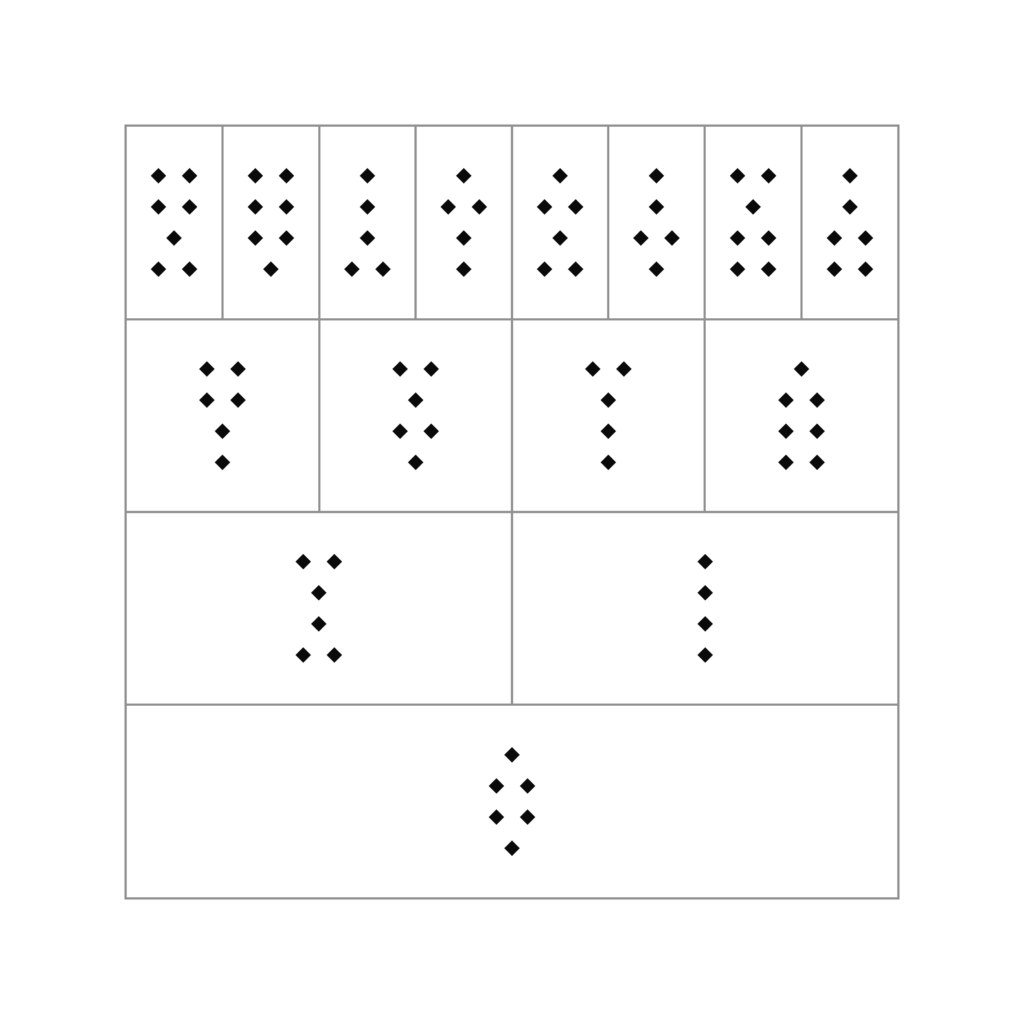
The rule is clearest and most convenient to see in the Shield Chart, because the chain of generation is visible there at once. In the Wheel Chart, the same figures are already distributed through the houses, which is essential for interpretation, but less convenient for the technical application of Paternity.
If the numbering of the chart is continued after the twelve houses, then:
- XIII is the Right Witness.
- XIV is the Left Witness.
- XV is the Judge.
Technically, there are only seven links in the chart where Paternity can be applied:
- I + II → IX;
- III + IV → X;
- V + VI → XI;
- VII + VIII → XII;
- IX + X → XIII (Right Witness);
- XI + XII → XIV (Left Witness);
- XIII (Right Witness) + XIV (Left Witness) → XV (Judge).
In each of these links, the first, odd-numbered position is the Father; the following even-numbered position is the Mother; and the figure after the arrow is the Child.
Paternity is not applied directly to the figures in houses I through VIII. Those figures should be judged by their own meanings, houses, positions, connections with other figures, and the general logic of the chart.
Sometimes, however, the chart itself indicates that such a figure should be reconsidered through Paternity. If a figure from houses I–VIII later repeats in one of the positions where this rule can be applied—especially if it appears as the Judge—then Paternity may be applied to that later position. In such a case, the chart itself points to a deeper examination of that figure’s nature.
Natural Quality of the Figures
For the purpose of Paternity, the figures are divided into good and evil according to their general nature.
Good figures:
- Lætitia;
- Albus;
- Fortuna Major;
- Caput Draconis;
- Puer;
- Puella;
- Acquisitio;
- Populus.
Evil figures:
- Tristitia;
- Rubeus;
- Fortuna Minor;
- Cauda Draconis;
- Amissio;
- Carcer;
- Conjunctio;
- Via.
Six Conditions of Paternity
In these six conditions, the astrological terms are used as qualitative images of the Child’s state. They show whether its nature is intensified, acting naturally, damaged, or softened by the influence of the Parents.
Exaltation
If a good Child is born from two good Parents, its good nature becomes extremely strong. Temporarily, such a figure acts better than its own nature would ordinarily allow.
This is like exaltation: the quality rises above its ordinary measure and appears with unusual strength and brightness.
Domicile
If a good Child is born from one good Parent and one evil Parent, it acts according to the goodness of its own nature. Its good is preserved, but it is not raised beyond its proper measure.
This is like domicile: the figure acts naturally, steadily, and according to what it is.
Peregrine Goodness
If a good Child is born from two evil Parents, its goodness is tainted. It remains a good figure, but its power to act well is narrow, weak, and limited to small matters. At times, under the influence of its Parents, it may even act with evil intent.
This is like the peregrine state: the good remains, but it does not receive strong support.
Fall
If an evil Child is born from two evil Parents, its evil nature becomes extremely strong. Temporarily, such a figure acts worse than its own nature would ordinarily allow.
This is like fall: the quality is lowered, the harmful nature is intensified, and the figure more readily shows its destructive side.
Detriment or Exile
If an evil Child is born from one good Parent and one evil Parent, it acts according to the evil of its own nature. Its harm remains real, though it does not become extreme.
This is like detriment, or exile: the figure acts in an alien and unfavorable condition, expressing the harmful qualities of its nature.
Peregrine Evil
If an evil Child is born from two good Parents, its evil is softened. It remains an evil figure, but its power to do harm is narrow, weak, and limited to small matters. At times, under the influence of its Parents, it may even act with good intent.
This is like the peregrine state: the evil remains, but it does not receive its full strength.